Released in late August, Resonance: A Plague Tale Legacy was an unexpected gut punch. I was skeptical about this prequel to Asobo's franchise, struggling to see the point when Requiem’s ending felt so perfect to me. I’m thrilled the Bordeaux-based studio proved me wrong: not only is Resonance an incredible game, but its soundtrack, once again helmed by Olivier Derivière, is remarkable on more than one level.
I had the chance to sit down for a long chat with the composer, who gave us the full story behind the scenes of a score that, much like the game it drives, shakes up the A Plague Tale formula!
(This interview has been edited for length and clarity. It contains minor spoilers, so you might want to finish the game before reading!)
How does it feel to be back for a new A Plague Tale, four years after the release of Requiem?
Olivier Derivière: Above all, it feels great to reunite with the team! Even if some of the faces have changed, David Dedeine is still there as creative director and Aurélien Baguerre as audio director. It’s always a pleasure to get back together with people you genuinely love working with.
That said, they kind of caught me off guard—a bit like what you felt: when I first saw what they wanted to do, it didn't seem obvious at all. But after all these years together, the game is out there, and it's up to you guys to tell us whether we pulled it off or not. It felt strange because, for us, A Plague Tale was over. Those were Kévin Choteau’s words [Game Director on the first two games]: Amicia and Hugo’s story was done, there was nothing left to tell there. As for where the franchise would go next, we really had no idea.
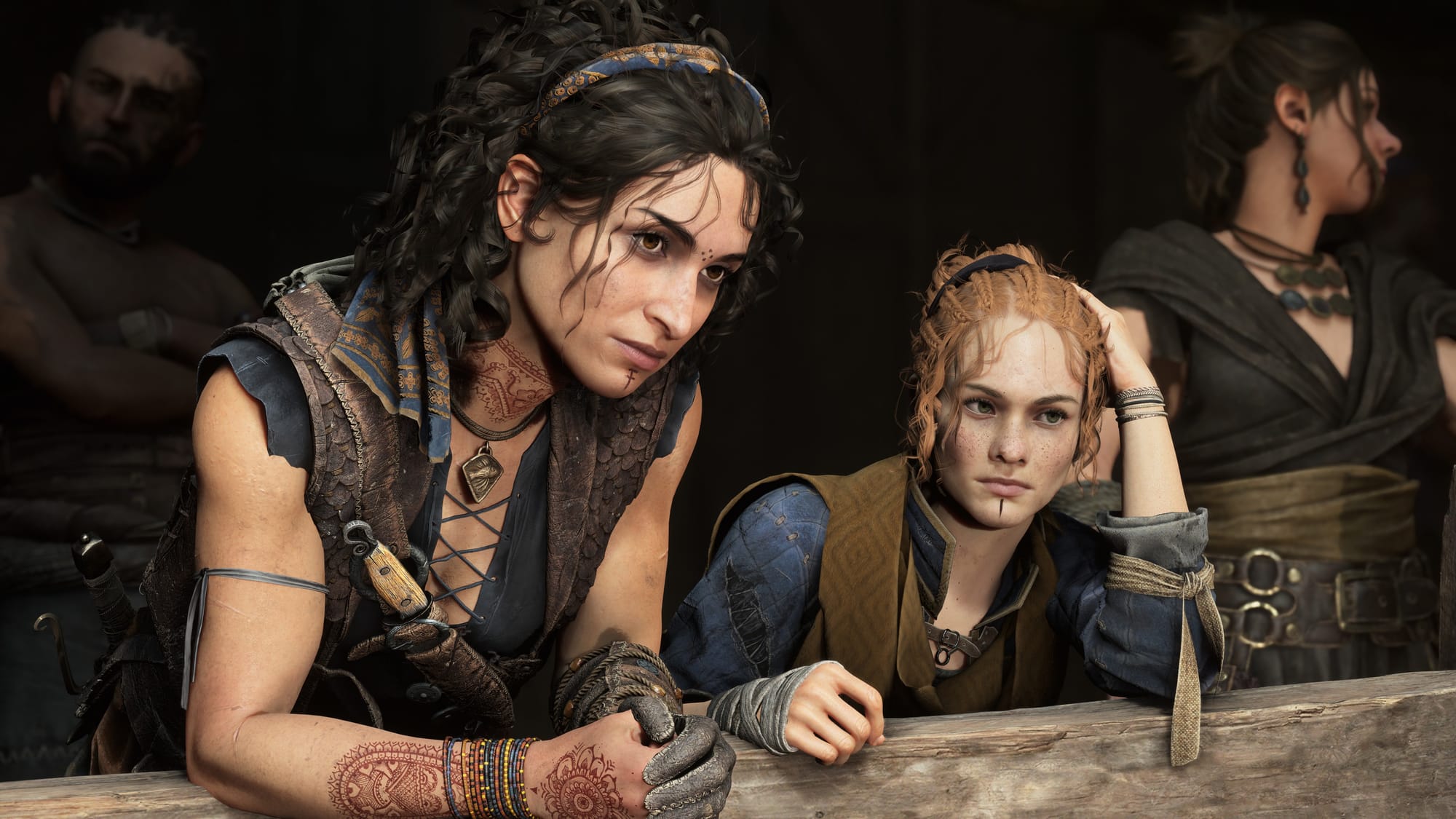
Even though I was definitely "Team Arnaud" and would have loved a game centered around him, an entry focused on Sophia is great too!
How long have you been in the loop about Resonance?
OD: I think I was let in on it a little over three years ago, about a year after Requiem came out—just enough time for them to align internally. I really started working on it in January 2024. That's when we told ourselves: here we go.
How long did the music take to put together, and when did you wrap it up?
OD: The day before release! In video games, you're always working right down to the wire. More seriously, early on, it's regular but spaced-out check-ins, once or twice a week with the creative director and the team. The actual composing kicks in about a year later. For a year, we prep everything; it's not full-time yet. Then comes the writing, and we start figuring out how to integrate the score into the game as I compose.
Ten months before release, we have a first playable build, and that's when you realize: this is it. All the pieces are on the table, and everything has to be dialed in. Those are the most intense, grueling months, with very long days. Luckily, I have a fantastic team backing me up, otherwise I would have lost my mind!
With Requiem, you had already considerably expanded the musical vocabulary of the franchise. Was starting from scratch with a brand-new character a challenge?
OD: The very idea of A Plague Tale posed a real challenge, because the full title was Resonance: A Plague Tale Legacy. It was crucial that it appeared in that order: Resonance first, then A Plague Tale Legacy.
But what does A Plague Tale actually mean at its core? It's a linear, narrative-driven experience, tightly paced emotionally, but above all, it's the personal arc of a character. It's not about saving the world—it's intimate, very personal.
The goal was to keep that spirit by zeroing in on the lead character and her emotions, while shifting every other parameter. Right from the start, David Dedeine told me: "Olivier, from the main menu on, people need to realize this isn't Amicia and Hugo, this isn't set in France, and this is a game that leans more into action than stealth." Right from the menu. That's why you hear the song "The Land" there. We hesitated between that one and another track with a more mystical vibe, but this one fit what David was looking for much better.
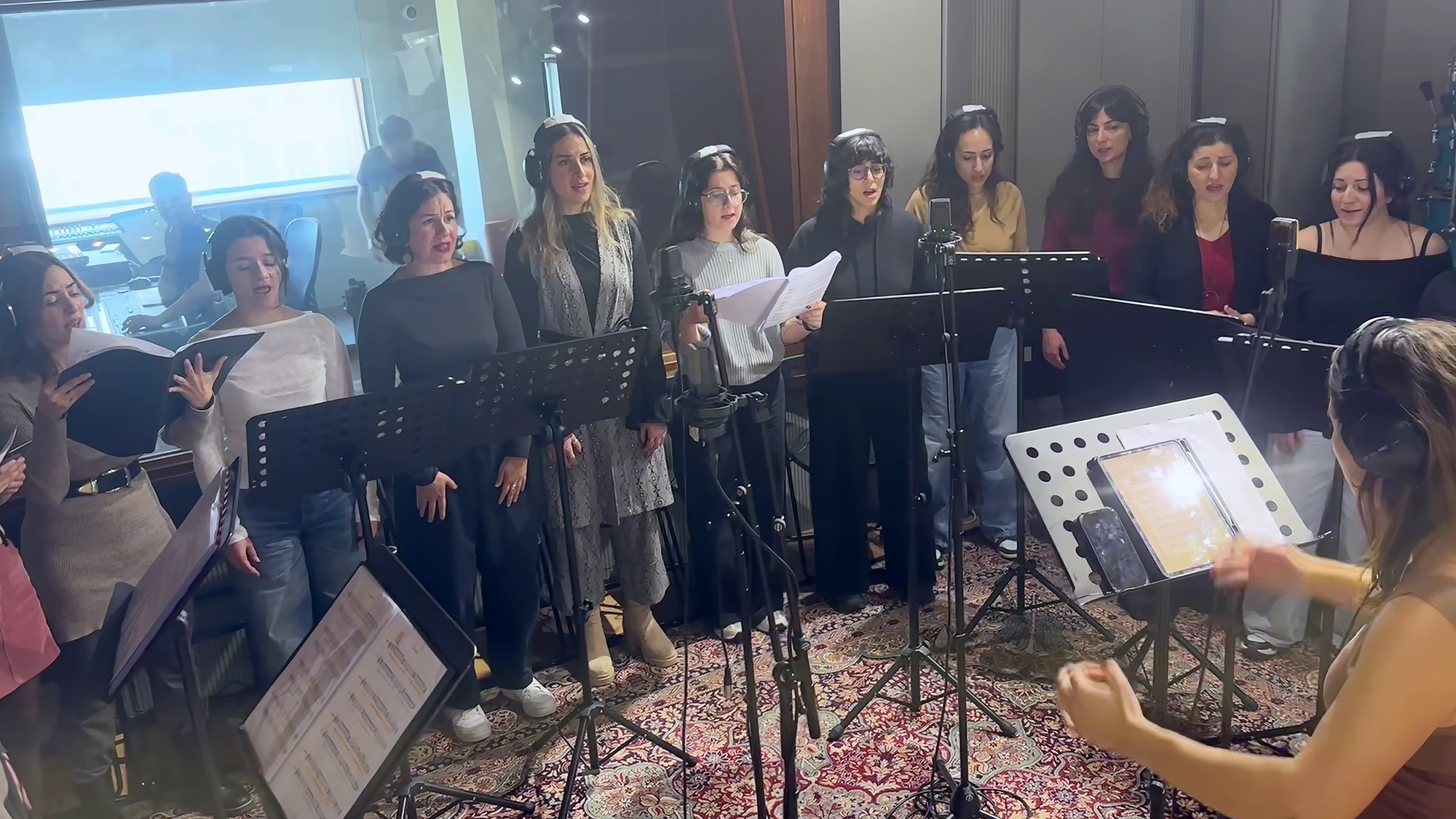
Resonance’s sonic identity owes a lot to Vasiliki Anastasiou and the Amalgamation Choir. Can you tell me how they came on board?
OD: Sophia grew up in a harsh, unforgiving environment, and she forged herself into one of the best after losing her father. Amicia discovered her strength out of necessity, whereas Sophia actively built her own resilience. David and I knew right away that we had to capture that in the music so players could feel that power. I quickly felt that a traditional female voice would be ideal, so I just typed into Google: "female singer greek choir."
I stumbled upon a ten-year-old video of the Amalgamation Choir conducted by Vicky [Vasiliki Anastasiou]. It blew me away. I sent it to David, he fell in love with it just as instantly, and we realized we didn't just need a singer—we needed a singer and a choir.
The choir provides that link to the past, that distant, mythical quality contrasting with Sophia's solitude. In the game, the first time "The Land" plays is at the end of her training, when she’s in the arena fighting: you only hear Vicky alone, without the choir. After that, the theme resurfaces in various instrumental variations, but the full vocal version with the entire choir only breaks out after another tragic event. When Sophia resolves to rise above it and face her enemies, the whole choir comes in—it’s as if Theseus and Ariadne were stepping in to back her up on her quest. The score literally mirrors the character's journey.
So the idea was to make Vicky's voice an extension of Sophia's emotions?
OD: Completely. And the line blurred even further when I met her in person. Vicky is Sophia! During our two recording sessions in Cyprus, she was seven months pregnant. She stood on her feet for nine hours straight conducting the singers, without a single complaint. A true warrior! We were completely mesmerized, almost intimidated by the sheer power these women radiated.
Right from our very first chat, Vicky asked me if the music had to be historically accurate, like a period recreation. I told her: "Not at all, it’s going to be my music. It’s a fantasy, a projection." She was incredibly relieved, because in their own repertoire, they draw inspiration from that tradition without claiming to recreate exact period music. On top of that, Vicky translated the lyrics herself into Cypriot Greek. That gave them a profound sense of ownership: they were singing what they genuinely felt and understood, which added an incredible depth to it.
"The Land", the lead single and the game's main theme, is gorgeous. How did that track come about? Was it the starting point for the score?
OD: I'll tell you exactly how it went down: I was scheduled to record Evgenios Voulgaris on yaylı tanbur and rebab on a Monday in Patras, Greece. My flight was on Sunday... and by Saturday, I still hadn't written a single note! I hastily composed four themes on Saturday on a scrap of paper, including "The Land".
It wasn't even a vocal track at first, just an instrumental theme. That's why the lyrics are so sparse: I had scribbled words about the land, the sea, and Vicky built around them in the studio. For creatives, it often works that way: the project had already been percolating in my mind with the team for a full year. I'm not someone who believes a melody needs to be labored over for months like Beethoven: when it comes out, it's there.
In the studio, I was practically discovering the music alongside Evgenios. I wanted to learn from him, see how he approached things. When he played the theme, he immediately smiled and said: "Well, what you wrote here sounds very Cypriot!"
Did you immerse yourself in local traditional music before writing, or did it come naturally?
OD: Most of the time, I avoid it so I don't get influenced. But when I discovered the Amalgamation Choir videos, I noticed they were using a very specific mode. It's a sound I rely on constantly in my compositions—so much so that Giani Caserotto, who played bouzouki on Resonance, calls it "the Derivière note"!
It just so happens that this note is an integral part of their musical tradition. I went with my gut, and Evgenios confirmed it sounded very Cypriot. Then, he brought his own touch to it. That's really where I look for the musicians' input. I'm not a fan of session players who just play strictly what's written on the page. When you go to Abbey Road with an orchestra, I write everything out and I know exactly what's going to happen. But with a soloist, you have to let them express themselves; otherwise, you miss out on so much and they end up frustrated. Whether with Vicky or Evgenios, I gave them the sheet music, and all the articulations were added by them. It's their culture. I told them: "Go ahead, make the music your own."
In the studio, they attacked notes with bends or subtle ornaments that I hadn't written down, but that's how they interpret it. It grounds the music in a precise cultural and geographic context, and that's exactly what we wanted.
We hear Éric-Maria Couturier's cello again, but you also brought in new instruments like the yaylı tanbur and the carnyx, which I wasn't familiar with at all. We hear it for the first time when facing those structures pierced with massive holes, like pipes. How did the idea of incorporating such an unusual instrument come about?
OD: You have to keep it very basic: they're pipes that make noise! It's set in ancient Greece, and we wondered what massive instruments existed back then. The carnyx is Celtic in origin, but they were also found in Greece during that era. So we thought: "Alright, let's do it." When the obvious choice stares you in the face, there's no need to overthink it with fake rationalizations.
Originally, we pictured using the carnyx for the sheer spectacle of sweeping vistas and colossal statues. We went down to Toulouse to record Samuel Méric in a chapel. Samuel started demonstrating what it sounded like, and it was just this slightly sad drone. It wasn't very impressive—just a metal tube. I asked him: "Can you really push the thing, give it everything you've got?" And right then, he unleashed these incredible sounds.
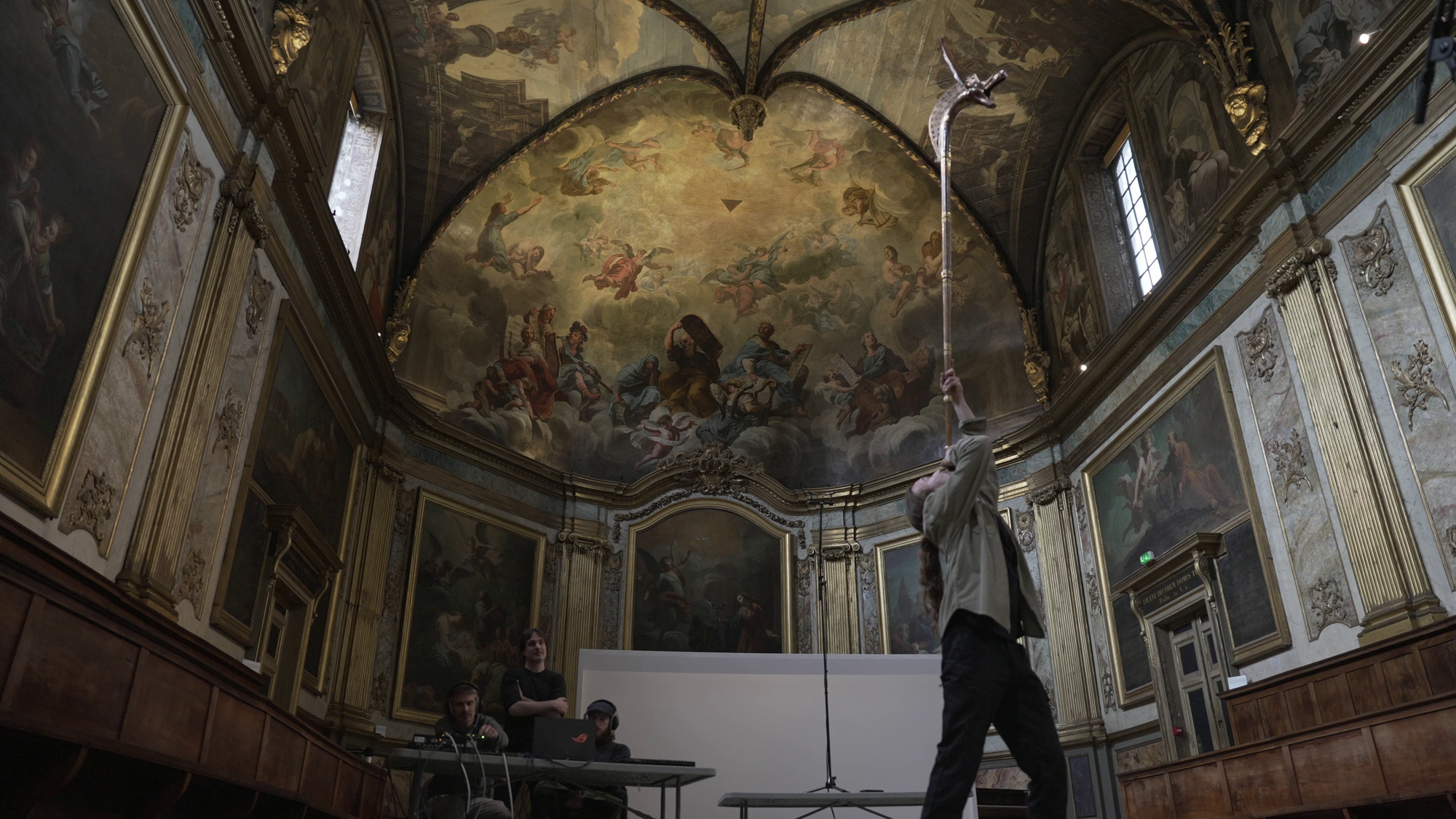
We all froze in the control room: the raw quality of that sound wasn't meant for epic landscapes—it belonged to the creature. Suddenly, with those pipes and guttural shrieks, the beast was right there in front of us; we were hearing it for the first time. Samuel had also brought along a goat horn, which produced some very unusual sounds.
The goat horn! I foolishly assumed that was an extremely sophisticated synth patch! Did any other frequent collaborators return for this entry?
OD: It was an actual goat horn! He was trying to bend pitches out of it, and once he nailed it, we hit record. That's the real work for me: venturing into uncharted territory with the musicians, right up until they tell me: "I've never played like this in my life."
As for other musicians, there's Giani Caserotto on bouzouki. Giani is so insanely talented and genuinely sweet you almost want to hate the guy! He has incredible perfect pitch: you play him a cue once, and eight years later he still remembers it and plays it back to you. He once told me: "Olivier, I think you're the one who pushes my capabilities the furthest, way beyond what I thought I could do." We did lute on the first A Plague Tale, blues guitar on South of Midnight, electric guitar on Dying Light: The Beast, and now bouzouki.
And of course, Éric-Maria Couturier returned on cello. Whenever the creature chases you, his razor-sharp string attacks instantly recall the rat swarms from the first two games. And as for me, I banged on some percussion!
Resonance opens up into much larger environments than its predecessors, with majestic vistas. Did you compose from concept art, or with a controller in hand?
OD: It's very iterative, a true team effort. There's a deeply personal layer to my music, but I keep that to myself, even with Asobo. The strength of A Plague Tale has always been that healthy creative rivalry across departments. Ever since Innocence, the artists have never stopped pushing boundaries, never recycling assets or environments. The player is constantly stimulated on a cognitive level.
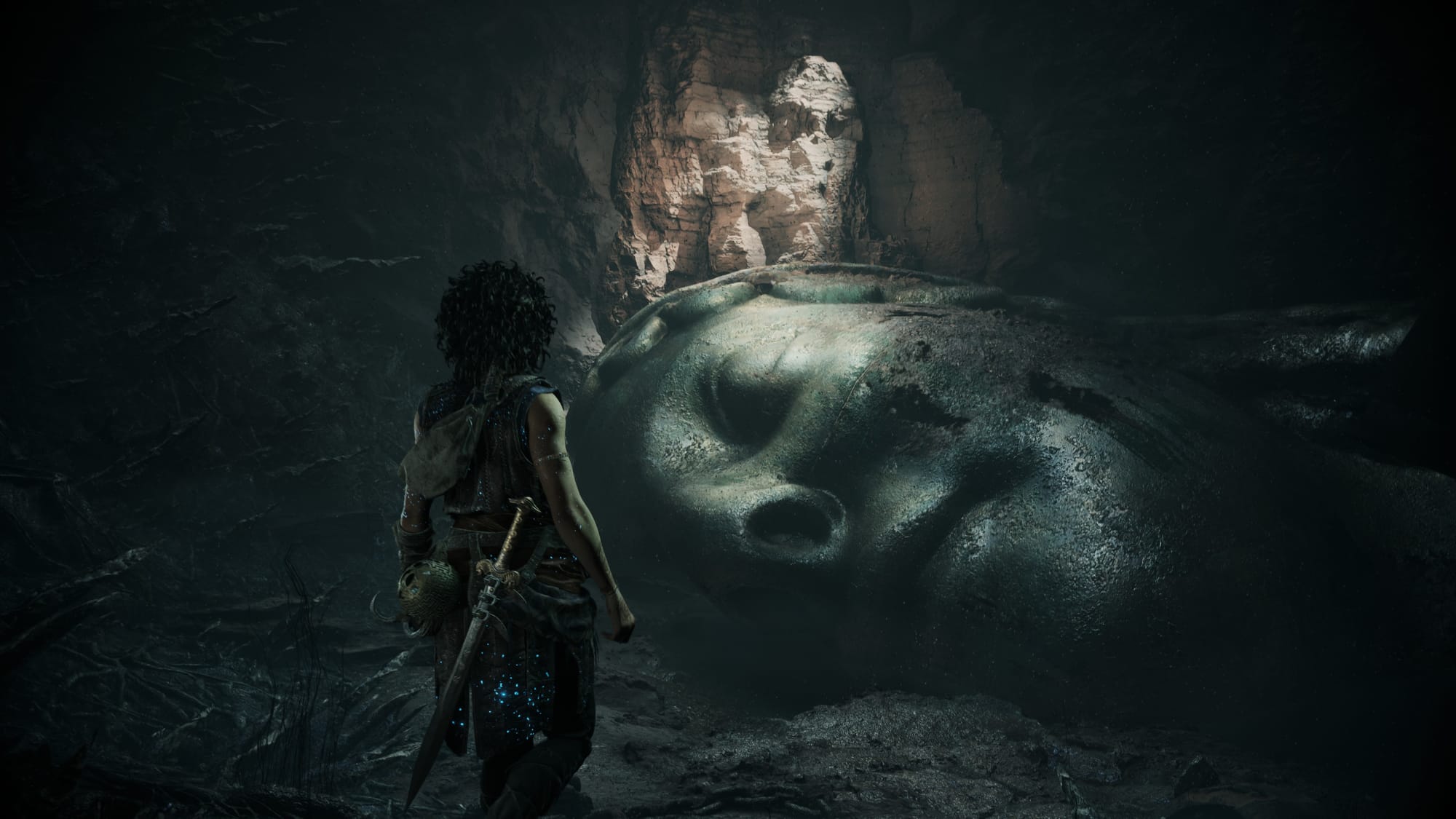
Early on, we work on greyboxes—plain grey geometric blocks where you really have to use your imagination. We lay down colors and themes, the concept artists design the visuals, and then the level artists dress the scenes. From there, David Dedeine and I fine-tune everything. When you arrive on the island with the towering statues, David was aiming for subtlety and restraint: he wanted the score to stay low-key to avoid that overblown Hollywood feel. I, on the other hand, saw sheer scale and dramatic weight. I pushed too far in one direction, he pushed too far in the other, and we met right in the sweet spot. It's an ongoing dialogue: the music can prompt the team to tweak a lighting cue or the pacing of a line of dialogue, and vice versa.
You're well known for your adaptive music. Did Resonance’s punchier gameplay present any unique challenges within the framework of an A Plague Tale game?
OD: A game like A Plague Tale is a ride—an unbroken line designed to engage you at all times. It's not like Dying Light, where the second you grab the controller, you're having instant fun with parkour mechanics. It's a game that pulls you into a narrative journey, and the music is there to guide that emotional arc.
When it comes to combat, we rejected the formula used by 99% of games right out of the gate: exploration, hard cut, generic battle music, hard cut back to exploration. The fights are dressed with the primary melodies and themes, but tailored to Sophia's mood and state of mind. When Leni is captured and Sophia has to fight her way across an entire area, the music isn't scoring a random brawl—everything is tied directly to her emotional state.
On that note, I loved the build-up in Chapter 7, where you climb the hill toward the temple while fighting enemies. You start with this heavy sense of grief, which turns into pure rage, and you can hear "The Land" evolving and swelling in the background throughout the ascent.
OD: That's exactly what we set out to build, and it's fantastic that you felt it that way! That's the beauty of interactive music. At the start, "The Land" is played on the yaylı tanbur like a mournful lament, because Sophia is grieving over what just took place. Then, as she presses forward and confronts the people responsible for her suffering, the fury builds. The music doesn't stop: the theme of "The Land" carries right through the fight, growing richer and gaining momentum along with her mindset. Everything stays seamless.
I'd take creating that kind of unique momentum a thousand times over forcing an endless combat loop that just circles around itself. It's a gamble: if it doesn't land in-game, the whole thing falls flat. But when it works, the emotional impact is so much stronger.
Do you have a personal favorite track on the score?
OD: It's always tough to pick a favorite track, but I have a great story involving Evgenios. I arrived at the studio and handed him the sheet music. He’s someone of incredible gentleness, deeply soulful. He looked at me and asked: "What emotion do you want me to put into the music?" The question threw me completely off guard. My head was buried in the notes, so I said: "We're going to do them all! Give me joy." He played the piece with pure joy. "Give me sadness." He played it with deep sorrow. "Give me rage." And he played it with fury.
It blew me away, because he transformed my music by injecting pure emotional intent into it. To him, it wasn't just about playing louder or softer—it was character acting, with completely distinct articulations and intentions. The second track on the album, "Father's Love"—which was codenamed "Patera Joy"—is that exact performance, infused with joy.
Music has been an integral part of the game's marketing campaign. You frequently share behind-the-scenes glimpses of your soundtracks on your YouTube channel, including the recent video with Evgenios (see above). Can we expect more videos on Resonance?
OD: I'll be completely candid about what happened. A Plague Tale was basically the opening act of a massive festival of releases: you have Dawnwalker, Onimusha, Wolverine, and plenty of other titles dropping. We decided to put the word out ahead of time because we didn't know how the game would be received, or how long it would stay in the media spotlight before outlets moved on to the next big thing. Once a game is out, people mostly want to see gameplay and reviews. Releasing those videos beforehand allowed players to discover this work before getting lost in the noise.
And honestly, sitting on a couch with messy hair and a mic just to talk about myself doesn't interest me in the slightest—my arm had to be twisted a bit! What truly matters to me is shining a light on the musicians. In our world dominated by screens and AI, putting human craft back at the center is essential. It was planned in coordination with Focus, who handled marketing: they gave us the green light to spotlight the musicians without spoiling anything from the game. It was the perfect opportunity to introduce people to these exceptional artists.
By the way, I noticed the soundtrack came out a solid week ahead of the game. That's fairly unusual, even if it happens occasionally. What drove that decision?
OD: It's very simple, and I'm going to burst the bubble a bit: the submission window for the Grammy Awards was about to close! The music absolutely had to be released before that deadline, otherwise it would have been pushed to the following year. It's as mundane as that.
After that, you play the awards game. South of Midnight was barely nominated at any major ceremonies this year. Personally, it doesn't bother me; I'm used to it and it won't change my life. But it hurt for the musicians who poured everything into it, and for John Kurlander, who recorded the score and has since passed away. That soundtrack meant a great deal to me. My main focus is simply making sure these musicians' work gets recognized and celebrated.
When you collaborate with players of this caliber, everything is elevated. It reminds me of the film Bohemian Rhapsody, when Freddie Mercury goes to Switzerland to record his solo album and tells Brian May: "In Switzerland, they do exactly what I tell them. And that's the problem!" A computer or an AI will do exactly what you ask it to do. But a human performer brings something immense that transcends the composition itself.
For Requiem, you released an extended version of the soundtrack. Can we expect something similar for Resonance, or were there many unused cues?
OD: There are anywhere between six and ten hours of music in the game—everything's in there. But for the official album, I only keep what's substantial, cues that have real meat and stand on their own outside the game. A fifteen- or thirty-second ambient layer looping while the player takes in the scenery works wonders with a controller in hand, but it has zero appeal on an album.
When I release extended versions later on Bandcamp, it's strictly to please players who persistently ask for their favorite in-game cues. I'm happy to do it, but to me, the official soundtrack album needs to be a cohesive, standalone listening experience. The only game where I'd really love to release a full extended version of every track someday is Streets of Rage 4, because the tracks went completely wild from within, but they were just too long to fit on vinyl!
Speaking of which, Resonance's soundtrack is also getting a vinyl release via Black Screen Records, as has been the case for most of your recent scores. How important is the physical format to you?
OD: For me personally? No, it's not important. I don't tell myself that vinyl makes my music more valuable: the music exists on its own terms.
If players want to buy the vinyl because it's a gorgeous collector's piece and they have an emotional attachment to the game and its score, that's fantastic, more power to them! But what matters a thousand times more to me is player feedback on how the music serves the game. On Dying Light 2, I asked the community directly what wasn't working in the score. Musical taste is subjective, but the production standards and in-game effectiveness have to be bulletproof.
To wrap things up with a question you probably can't answer: do you think we'll ever see Sophia again in a future game?
OD: That's purely entering the realm of wild speculation! All I wish for Asobo is that they keep doing what they do best: surprising us. Whether it's Flight Simulator or their narrative games, they're a deeply deserving French studio with extraordinary artistic and technical chops. Whether they carry on with A Plague Tale or move on to something completely different, I know in advance it's going to be brilliant.
A Plague Tale was never built to pull in millions of sales in week one like some massive blockbuster where you ride a horse with a sword strapped to your back. It's a long seller: a game that endures over time thanks to its unique aura. There are so many releases nowadays that nobody can keep up, and players' attention is stretched thin. The beauty of an A Plague Tale game is that it delivers an intense, focused experience you can wrap up over a weekend. In today's gaming landscape, that kind of diversity is invaluable.