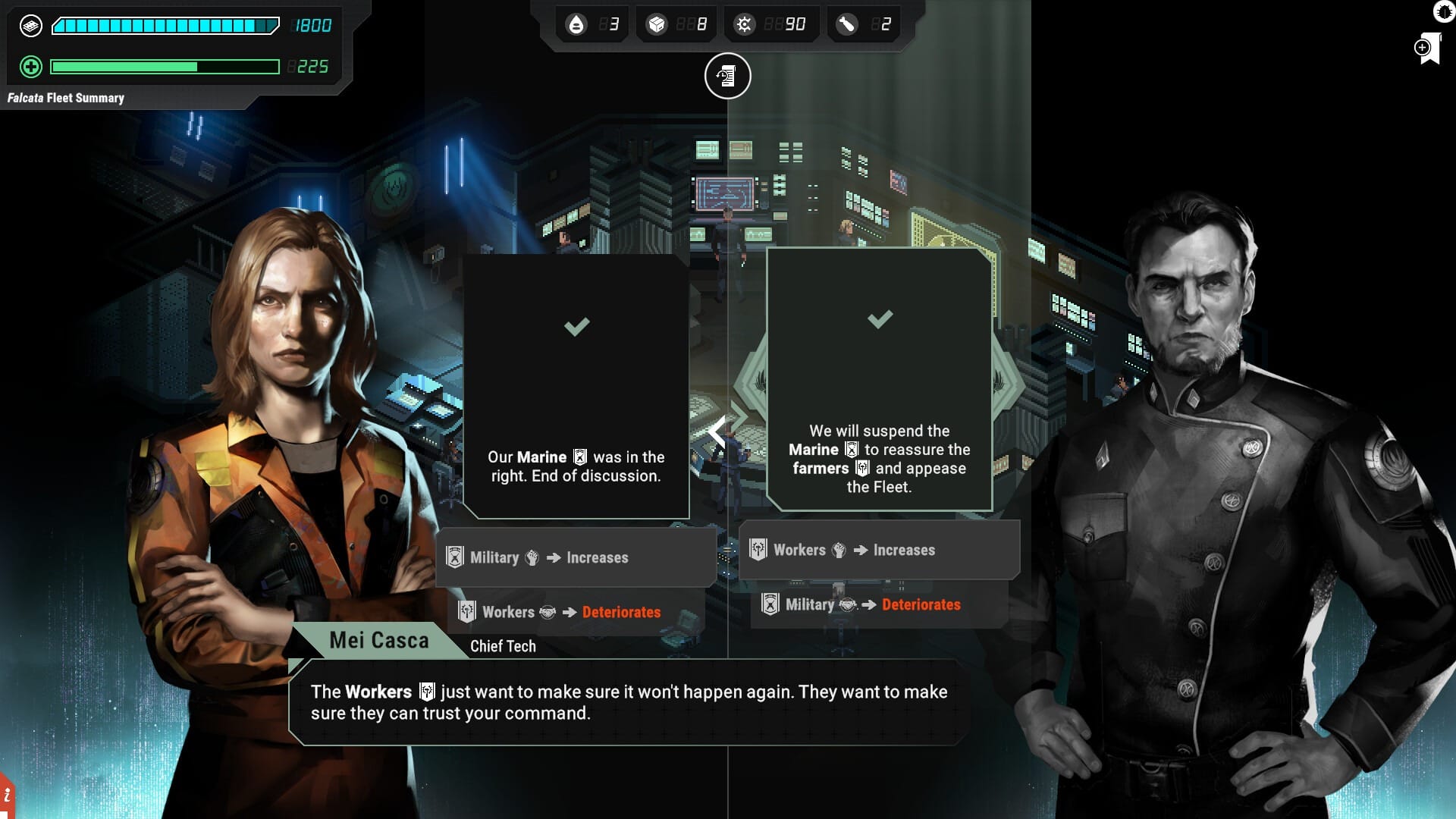
I must admit I’m not very familiar with the Battlestar Galactica universe—I’m not particularly into sci-fi. This doesn’t mean I’m unaware of how much the franchise inspires passion or how every new entry rallies the fans. This week, they certainly had plenty to celebrate with Battlestar Galactica: Scattered Hopes, a space strategy game with rogue-like elements that received a warm reception on Steam.
While its soundtrack hasn’t appeared on streaming platforms (yet?), I had the chance to give it a listen. And if you’re reading this today, it’s naturally because I found it incredible. Meet Nicolas de Ferran, whose music has likely already accompanied you for hundreds of hours on They Are Billions.
Can you start by introducing yourself? Your CV is particularly impressive, and I realized I’ve heard your music in places I never would have guessed (TV shows, podcasts…).
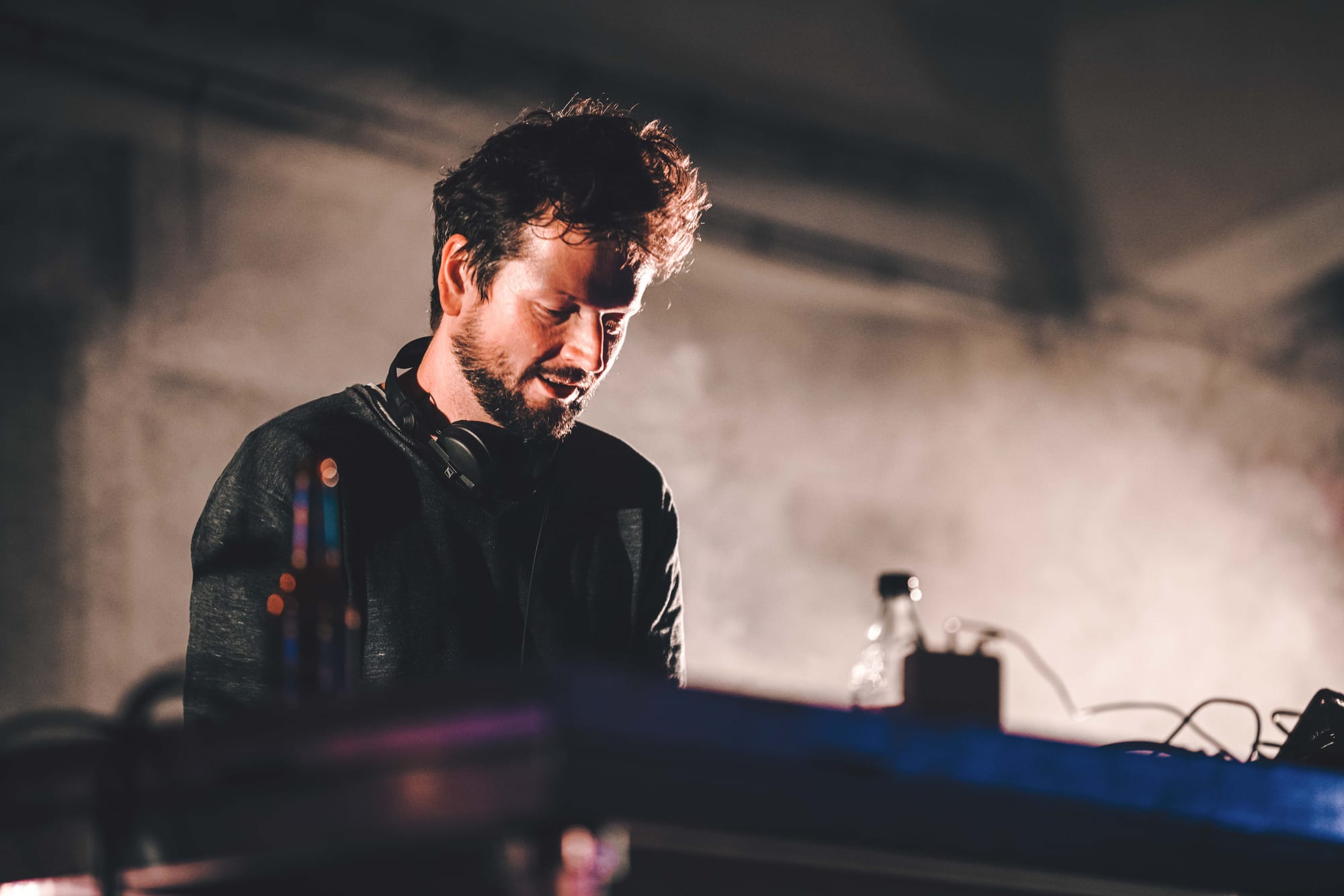
Nicolas de Ferran: Hello! I’ve been a professional composer for 12 years now. I started my career in video games with Lords of Xulima, an old-school RPG funded via Kickstarter. The studio behind that game was none other than Numantian Games, who created They Are Billions a few years later—a game that saw unexpected success. I’ve also worked on plenty of games you’ve likely never heard of: mobile games, indie titles, VR escape rooms… I was also a Music Editor alongside Olivier Deriviere for several years, working on The Technomancer, Vampyr, A Plague Tale: Innocence, Greedfall, and many others. And indeed, I’ve also written a lot of music for television: Disney Channel, BBC, France Télévision, M6… as well as for podcasts (Les Baladeurs), immersive museum installations, and advertising (Honda, Salomon, Sephora, TicTac…). In short, I’ve had the chance to do a bit of everything over 12 years, which is very cool, but my primary motivation has always been making video game music!
What is your relationship with Battlestar Galactica? Is it a universe you know well?
NdF: I love fantasy and science fiction, so I obviously knew the franchise, but only vaguely. I really enjoyed diving into this universe and discovering it while working on the game. Now I need to catch up and binge-watch the rest of the series.
After They Are Billions, you’re back with the OST for a new strategy game. Is this a genre you particularly enjoy, or is it just a coincidence?
NdF: I wouldn’t say it’s a total coincidence because, after They Are Billions, several studios contacted me to make "TAB-likes," RTS games, or city-builders. When a studio looks for a composer for their project, it’s not uncommon for them to look at what’s been done on competing games or their inspirations. So naturally, since They Are Billions was the big indie RTS of the moment, I became somewhat associated with the genre. But I’m not complaining—I love it!
BSG has seen a wide variety of adaptations and spin-offs. But in the public imagination, the series is inevitably linked to its soundtrack composed by a certain Bear McCreary [God of War]. Any pressure?
NdF: Yes and no. I didn’t particularly want to copy another composer's work, and the problem is that’s often what you’re asked to do on well-known licenses (Star Wars, Harry Potter, etc.). Fortunately, AltShift and I agreed right away, and we decided not to imitate Bear McCreary's style for the game’s music, but rather to try and find our own voice. I was very lucky in that regard. The pressure now comes more from the potential reaction of the players: will they be open to a style different from what they’re used to with the series? I try not to think about it too much because I’m really happy with the work I did on this OST.
What is the difficulty of working on a licensed game? You’re inevitably exposed to comparisons with the music from the films and series.
NdF: Absolutely, and as I said before, that can create some pressure. But developers come to me so that I can bring my personal touch and sensitivity to a project, to bring a new "color," and I think players can understand that. Otherwise, what’s the point of hiring a composer? In the end, what matters most is that the music works with the game. If it serves the experience and the players' emotions well, they’ll get on board with it.
I really like the leitmotif of the OST. It reminds me a bit of the Horizon franchise—Aloy’s theme. What inspired you?
NdF: Thanks! That’s a coincidence because I played Horizon when Zero Dawn was released and haven't had the chance to play the franchise since. For this theme, I tried to draw inspiration from what the game characters are supposed to feel during their journey: they are lost in space, searching for a refuge. There is hope, but also a lot of anxiety, pain, and apprehension. That’s what I tried to convey in those few notes.
I imagine you made a little list of space OSTs to listen to for inspiration before you started writing. What was in your headphones before you laid down the first notes?
NdF: Not at all! I try not to let myself be influenced so I have more "room" to compose, so when I start a new project, I close myself off as much as possible to other music in the genre. I prefer to be inspired by the subject matter: the story, the stakes… and of course the gameplay.
I started working on Battlestar Galactica: Scattered Hopes two years ago, so I confess I don’t remember what I was listening to at the time, but in terms of space OSTs, FTL: Faster Than Light by Ben Prunty remains my favorite, along with Dead Space by Jason Graves. Two drastically opposite soundtracks.
I’m curious to discover the behind-the-scenes of the music. You worked with a cellist friend, right? Did other musicians also contribute their touch, or did you handle everything else?
NdF: Indeed, I called upon Georges Barré, who, in addition to being a friend, is an exceptional cellist currently playing at the Paris Opera. I needed an acoustic instrument that was very lyrical and expressive to bring a human side to the music, to contrast with the very dark electronics that evoke the Cylons. He spent a day at my studio recording the theme inside and out.
I also brought in Michaël Boga, a composer friend who assisted me by doing additional music. He also helped me quite a bit with the mixing. I really enjoy working in a team; it’s something I’d like to do more often if budgets allow. Otherwise, of course, aside from the cello, everything you hear in the music was performed by me. To get into the details, I mainly used a Prophet Rev2 (an analog synth), as well as Zebra 2 (a virtual synth). I also add a plugin called Decapitator, which emulates hardware saturation (tubes, transistors, etc.) and adds a lot of life and texture to my synth tracks. I also used RC-20 a lot, a tape emulation plugin, again to bring back some analog warmth. Finally, my reverb of choice for this project was Valhalla Shimmer, a reverb that adds pitch-shifting effects and has an unpredictable side. I love it.
As you explained in the music presentation video published by Dotemu, you wanted to marry organic sounds with electronic music. What’s the secret to finding the right balance?
NdF: The secret is to open your ears and listen. There’s no miracle recipe; you have to try, correct… until it works. I approach this kind of work the same way I would an orchestration for a symphony orchestra. It’s a question of timbre, texture, and balance.
With electronics, there’s also more extensive "production" work and mixing choices that aren't necessarily conventional. For example, when two cello parts play together, the tendency would be to pan them left and right, but for some tracks, we chose to put both in the center, in mono, because it worked better with the electronics that way. When you know the trade, it might seem absurd, but the result is really cool.
The OST contains several tracks that are a bit more "aggressive" or "angry." I’m thinking particularly of 'Dradis Spike' or 'By Your Command,' which are surprising the first time you hear the OST. What’s more fun for you? These types of action-driven tracks, or the more introspective, melody-driven pieces?
NdF: To justify this choice a bit: I’ve always been a proponent of "shocking" players to make them feel strong emotions. I think it’s important to "get in their face" a little from time to time, to pull them out of their comfort zone. You shouldn’t be afraid of that. Many developers advocate for "seamless" transitions—soft music that goes unnoticed. But I think that’s a mistake in many cases. You shouldn't underestimate players; they can take a musical "kick in the gut" every now and then. And they’ll remember it positively.
And yes, to answer your question, I had a blast making those aggressive tracks—it was a great way to release bottled-up emotions, haha! But it’s not easy to do, either; it’s always a lot of work. I also love writing calmer tracks, of course. Brutal or soft, the approach is the same: you have to express an emotion that you look for within yourself, you manipulate it, shape it, and transmit it through the music.
The next track, 'To The Lost Tones,' also surprises with the appearance of a clean electric guitar. It offers a very surprising but welcome side to the soundtrack. How did you come up with the idea of adding an instrument to the existing palette?
NdF: That was an idea from Frédéric Lopez, the CEO of AltShift and the game’s Art Director. It’s a track heard when you’re in the ship’s bar; it’s a special moment in the game, almost a moment of relaxation, where the player can talk with crew members. It made sense to bring in an element heard nowhere else to create a break from the rest.
Battlestar Galactica: Scattered Hopes incorporates a roguelike dimension; it’s a game with high replayability. Consequently, players will spend a lot (a lot!) of time with your music. How do you compose loops so people don't get tired of them?
NdF: We set up a music system that allows for great musical variety during the game, especially during combat. The music evolves based on the intensity and criticality of the situation. The system works like a two-entry matrix: for example, if the player's fleet is in a critical state but the combat intensity is low, the music will be different from what's heard during very intense combat in the same critical state. We have three levels of intensity and three levels of criticality, which offers a lot of possibilities. The more ambient tracks heard outside of combat also follow this same logic.
Finally, do you have any albums (VGM or not!) to recommend to my readers?
NdF: I’ll give you the three non-VGM albums I’d take to a desert island:
- Zero 7 - Simple Things
- Avishai Cohen - Gently Disturbed
- NOFX - The Decline
And as far as video game music goes, I think I’d take these:
- Koichi Sugiyama - Dragon Quest VIII
- Toby Fox - Undertale
- Ilan Eshkeri - The Sims 4 (this choice always surprises people, but the work they did on that music is incredible!)