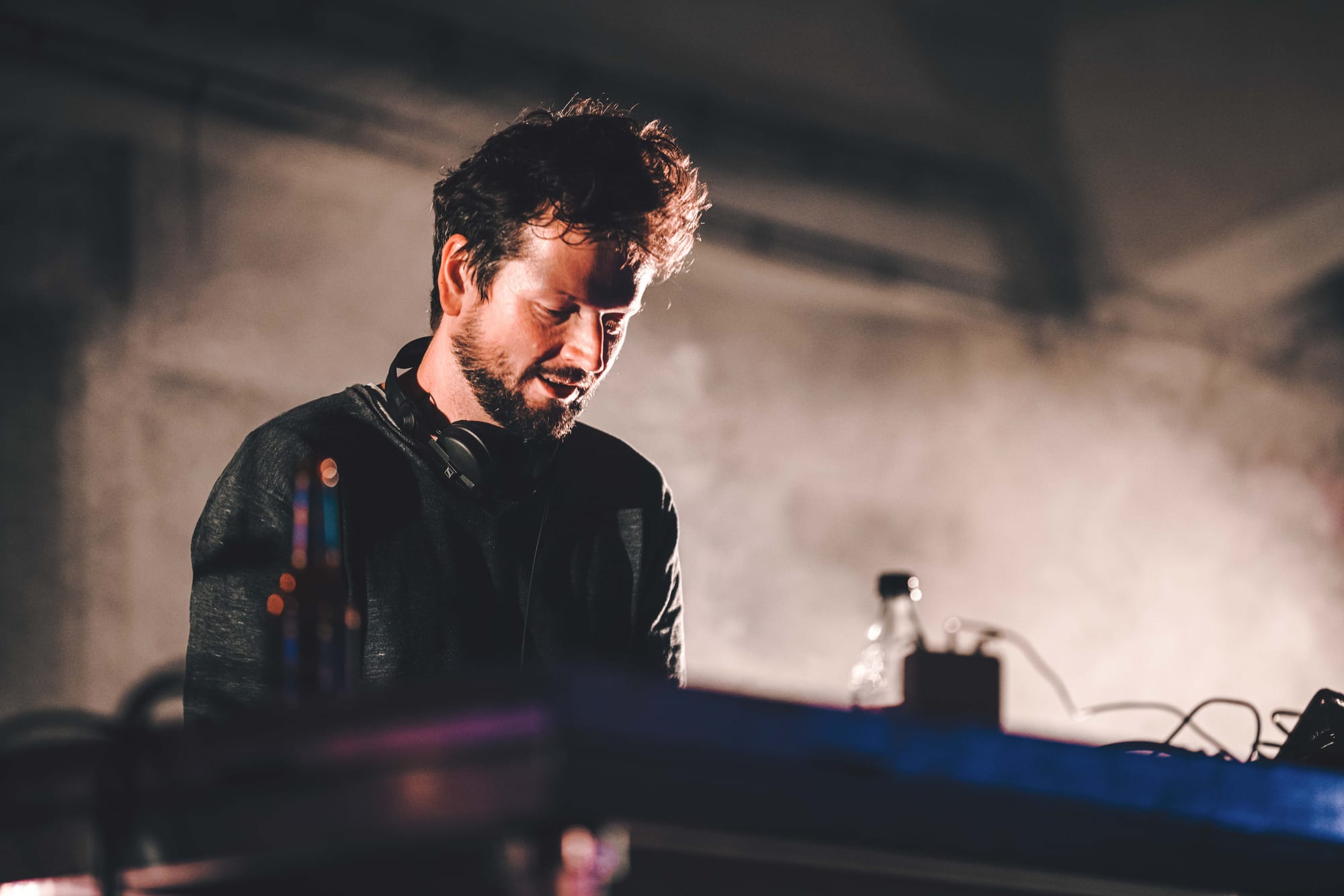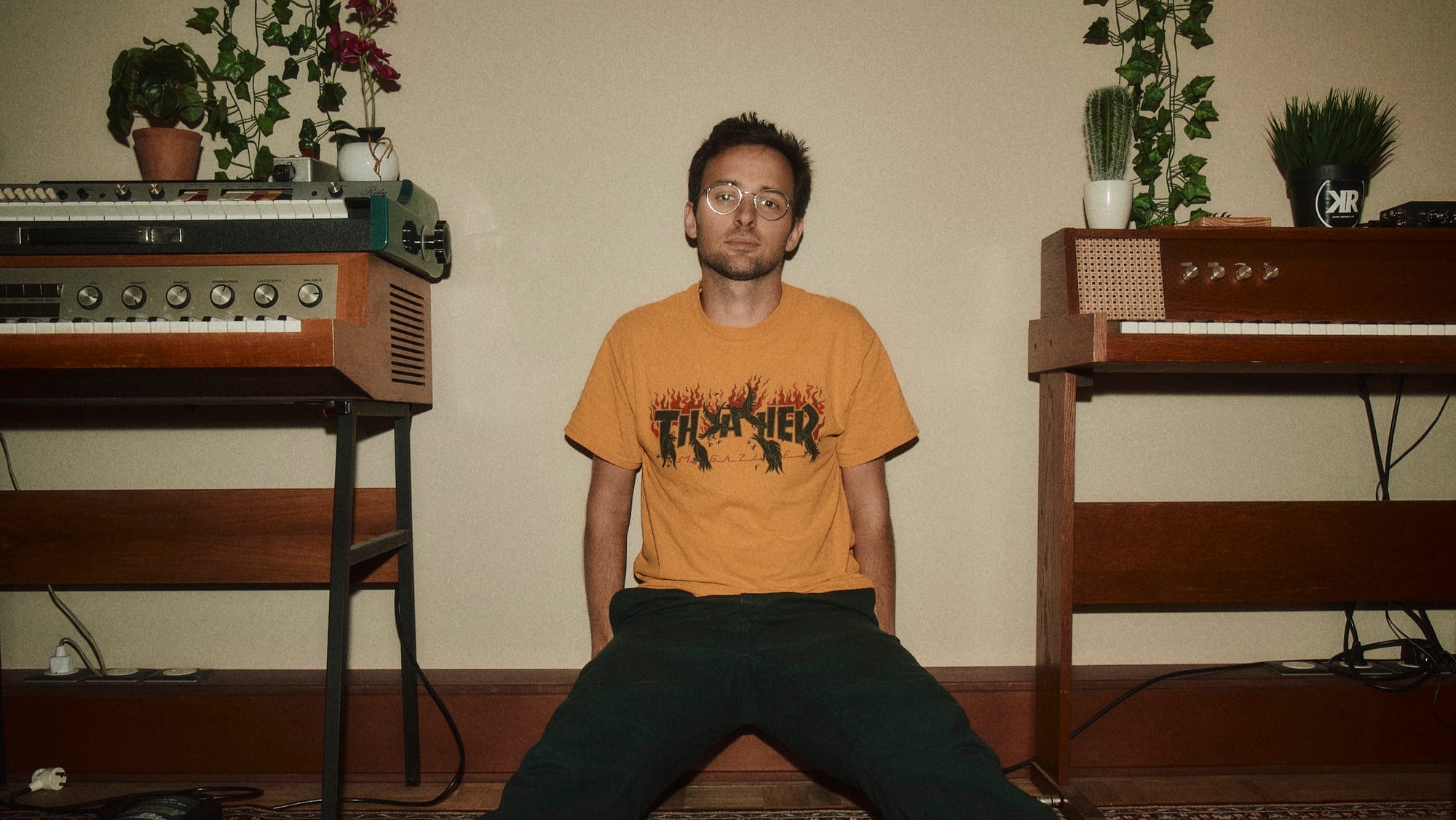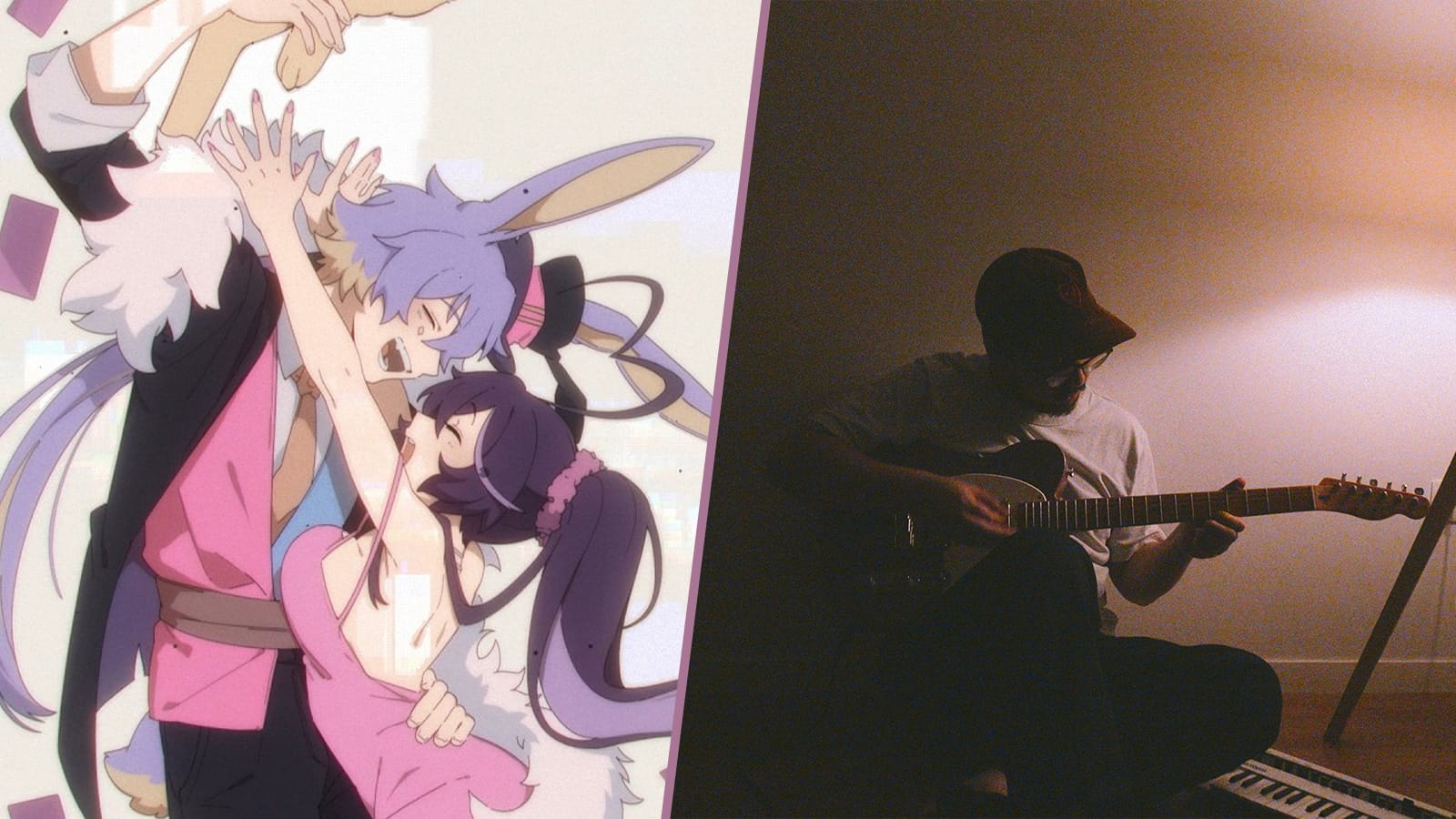
As I was digging through Pretty Patterns' discography, shortly after reporting on the Kernel Hearts soundtrack release, I froze upon looking at his profile picture. Not because it was strange or provocative, but because the location looked so familiar. Funny enough, it turns out the composer and I live in the very same city. Naturally, I set out to meet the man over a pint of cider.
Diego is a young but confident musician whose recently released Kernel Hearts marks his first step into the video game music space. A seasoned producer—and avid gamer—he handled the task without much anxiety. In fact, one can enjoy his score like any other of his past releases. That's what makes Ephemera's debut game so enticing: it looks and sounds familiar enough to appeal to a broad audience, but goes the extra mile to try and be more than the sum of its parts.
A lovely fellow, Diego kindly answered all my questions about what it means for him to officially become a video game music composer.
Kernel Hearts is out now on PC, PS5, Xbox Series and Nintendo Switch.
Hi Diego, and a huge congrats on the release of Kernel Hearts. To kick things off, could you tell me a bit about yourself? What is your musical background?
Diego / Patterns: Thanks a lot! I’m a freelance composer and producer working under the moniker Patterns. Right now, I work across a ton of different formats, whether that’s video game music, production for indie artists, or my own personal side projects!
I started out playing piano and taking lessons when I was younger, but despite having an amazing teacher who was remarkably patient with me, I always struggled with the more rigid, structured side of formal learning.
It remained a hobby even after those lessons eventually stopped, which led me to start uploading covers to YouTube over ten years ago now. From there, I began playing around with more tools to produce music (FL Studio, Ableton) and collaborating with other artists, always as passion projects on the side rather than anything truly professional.
It wasn’t until the COVID years, during some fairly quiet periods of remote work, that I had the time to look into making a living out of it. Some of my friends jumped at the chance to become artists, streamers, and game devs, among other things, and they nudged me to turn pro by hiring me to help out on their own projects.
Since that community of up-and-coming creators had already been around for years, those amateur circles gradually turned into networks of rising professionals. That allowed many people like me to find their footing, and that’s where I am today!
You mentioned in a DM that this was your first “real” video game OST. What is your relationship with gaming?
P: Yes, exactly! It’s my first full soundtrack as lead composer. Even though I still spend a lot of time gaming today, I’d say my connection to it is mostly nostalgic above all else. I started out pretty young with the original brick-sized Game Boys that were heavy enough to throw in a riot, playing games like The Legend of Zelda: Link’s Awakening. For a kid, having that kind of experience for the first time is pretty wild.
While I was putting together the OST release for Kernel Hearts, a very vivid memory came back to me of playing Link’s Awakening on the bus. I was completely spellbound by “The Ballad of the Wind Fish” when it started playing during a cutscene, to the point where I put the track on endless loop, holding the Game Boy right up to my ear despite the rather piercing quality of the built-in speaker, haha. At the time, and for years afterward, I had no clue what to do with my life, so looking back on that little moment hit me right in the feels.
Nowadays, I’m a big fan of the optimization and competitive side of gaming (speedrunning and esports), but also of compelling stories and characters that just couldn’t exist in any other medium.
You’re an artist with an established online following and community. How was the soundtrack received by the people who usually follow your work?
P: I’m really lucky to have such an open-minded and supportive audience. Whether it’s commercial projects, video games, or slightly different personal tracks, I’m truly grateful to be able to experiment without the stress or fear of letting down a crowd that might expect one specific style.
Kernel Hearts was no exception, and it’s been an absolute treat reading the comments, DMs, and reviews of the game that bring up the music, whether positive or critical! This was a first for me, so getting feedback on what landed and what didn’t is invaluable for doing better next time.
Overall, I found people to be remarkably kind and generous in their appreciation of the OST, even with the flaws I’d like to iron out in the future. A massive thank you to everyone who took the time to listen, as always!
How did you get brought onto Kernel Hearts? Ephemera is an Argentine studio, right?
P: That’s right! Akira, the director at Ephemera Games, reached out to me and a few other composers back in 2023 to write demo tracks for the game. After a few tests, I was lucky enough to earn his trust for the project.
He and Momotexx, our character designer, have known each other for a very long time, and since she’s part of the same online community as me, I think my name must have come across his radar through her!
The game has been out for a few days now. Are you happy with the reception so far?
P: A resounding YES! We were extremely fortunate to have an engaged community right from the earliest playtests and demos, which let us roll out as many improvements, bug fixes, and extra content as possible based on their feedback.
That community was essential throughout every stage of development and proved to be an incredible source of motivation for the entire team. We still regularly share heartwarming player reactions in our team chat.
Of course, we also got our share of harsher critiques on several aspects, and that’s something we gladly take on board if it helps us improve the game with the resources we have. It’s a fairly unique genre that also takes a bit of time and investment before unlocking its full potential, so we completely understand it won’t be everyone’s cup of tea, but I think we fully embrace that identity anyway, haha.
Walk me through the composition process for the OST. What was the starting point, and how did you find the signature sound of the game?
P: In most cases, we’d discuss an auditory moodboard before starting a track, whether that meant existing musical references, specific themes we wanted to tackle, or instruments we wanted to incorporate into a given floor, fight, or character.
Akira already had a pretty clear vision of what he wanted for each stage of the game, even though he isn’t a musician himself. He has an extensive knowledge of VGM, which made communication effortless between us, but he’s also very open-minded, allowing us to pivot from our initial premise whenever it felt right.
In my view, we found our sonic cohesion around the idea that every floor and encounter should stand out as much as possible and carry its own identity. That created a patchwork, mixed-media feel that I really care about on this project. It’s the collage approach that reinforces the game’s identity, rather than relying on recurring leitmotifs, themes, or textural uniformity you’d find in a more traditional score.
There are quite a few guest features on the OST, which helps give each track its own distinct identity while broadening the potential audience. Did you know right away who you wanted to collaborate with? I noticed you’d already worked with RINO in the past.
P: I’m incredibly lucky to work within a community alongside fellow artists, composers, and vocalists whom I deeply admire for their craft, style, and professionalism. It was a no-brainer to reach out to them, either for their signature flair (like Pernelle on “Cendres”) or their sheer versatility (like RINO on “Flos” or “Iterum”).
RINO is a singer who often gets brought in for complex, highly technical pieces, but she can do literally anything if you give her the chance! It was great to explore her softer register on the tracks I just mentioned, for instance.
What I love about the Kernel Hearts OST is the variety of genres. You’ve got deeply emotional, JRPG-leaning tracks, others that lean into acid jazz, UK garage, house... Is that simply a reflection of the music you love, or was that diversity vital for the game itself?
P: Both! We touched earlier on sonic unity through that patchwork aesthetic, but it was also a great excuse for me to play around with styles I don’t often get to produce, despite loving them dearly.
Besides, the game’s core loop inherently involves replaying levels, meaning players have to run through the same zones multiple times. Introducing distinct sonic palettes on a regular basis was also our way of making that gameplay loop feel much fresher and more enjoyable!
Two tracks on the album explicitly channel keygen music. Is that a scene that inspires you?
P: Originally, it was just a funny realization after the fact, noticing that those tracks sounded exactly like the kind of tune that would blast out of an installer after downloading something a bit shady, haha.
I leaned into it a bit harder by sampling the “Think break” to play up the trope, but yeah, there’s definitely a distinct nostalgic aura in those kinds of tracks. It’s a very specific vibe that might ring a bell for some listeners—strictly for legal reasons, of course.
Which track on the OST are you most proud of? Give us the behind-the-scenes story!
P: I’d probably go with “As Above” featuring vally. It was one of the last tracks written for the game, and I was given completely free rein over the production and genre, despite it being THE closing track of the entire game.
Across the whole OST, I think it’s the piece that comes closest to what I’d make for my own artist project. Having the team greenlight it felt like a quiet milestone for me, almost like being told: “You don’t need to pretend to be someone else.” For someone who deals with a lot of self-doubt, that’s pure gold, haha.
It was also a treat to team up again with vally, who sang on “Once Upon an Eternity,” and Stephens Oyeniran, who handled the gospel choir parts on “Lumière” alongside Emi.
Will we be hearing your work in other video games anytime soon? Are you aiming to make game scoring your main gig?
P: I’d love to! I currently have an unreleased track lined up for Stars of Icarus, developed by Muse Games—the game should still be in closed beta, if I’m not mistaken. No full OST projects on the horizon for now, though it’s definitely something I’d jump back into if the opportunity comes up.
As for doing this full-time, it’s something I think about regularly, but I genuinely enjoy balancing personal music, commercial gigs, and game scoring! I feel it gives me a unique creative freedom that would be tough to keep if I were an in-house composer at a studio, for instance. That said, it all comes down to the project and its creative direction!
What are you listening to lately? Any inspiring recommendations to share?
P: If there’s one record that’s really stuck with me lately, it’s definitely Autofiction by Far Caspian. It’s gorgeous, raw, unpretentious, and completely hypnotic. Perfect for spending an hour staring at the ceiling or out of a train window as autumn sets in.
I also regularly listen to this criminally underrated artist: Neanderthal. You can’t not love "Jet pack" and "Hey Bestie".
On top of that, I always love keeping up with what my peers are making. When it comes to standout recent releases:
"Satellite" by Miyolophone, a great friend of mine who composed the soundtrack for the game Starlight Re:volver.
"The Total Implications of a Youth Untold" by Chalkey & Riemann, longtime colleagues I’ve had the chance to work with regularly. An absolute earworm of a track.
And of course, Paon’s entire album, Philosophie du soi, created by Pernelle and Lemm.
I read on Ephemera’s website that you play a lot of Overwatch. Who’s your main?
P: Rein and Lúcio! My soul is still intact (for now) 🙂