Even if you don't follow video game news that closely, it's pretty much impossible to have missed the relentless wave of layoffs hitting the industry in recent months.
The tip of the iceberg comes stamped with Xbox's green X, where recent restructurings have already left 1,900 employees out in the cold—with another 1,300 living under a sword of Damocles set to fall in the coming months.
Yet Microsoft is far from the only giant making deep cuts. Since the start of the year, 10,318 people have lost their jobs across the video game industry. Projections from Always Supporting the Games Community suggest nearly 4,000 more could join the tally by January, potentially making 2026 one of—if not the—most devastating years on record, right behind the brutal bloodbath of 2024 (15,631 layoffs).
If the industry is falling apart, it’s not because it’s making less money. Quite the opposite: gaming has never been more profitable, and it’s set to keep printing money on a steady upward trajectory over the coming years.
The issue is simply that the proverbial Covid honeymoon is over. Investors are now far more interested in pouring money into projects pitched as capable of delivering "substantial growth" (check out Alanah Pearce’s fantastic video on the topic).
In short: gaming has lost its shine for investors. As a result, there’s less cash available to fund projects that break away from live-service games, which are designed from the ground up to bleed players dry.
Yet gaming isn't just about studios. It’s also made up of countless independent workers and contractors bouncing from gig to gig, hoping to make ends meet and build a name for themselves in the scene. Naturally, as the market tightens, opportunities grow scarce and budgets shrink.
I spent the last couple of months reaching out to dozens of freelance composers, asking them a very simple question: how are you holding up?
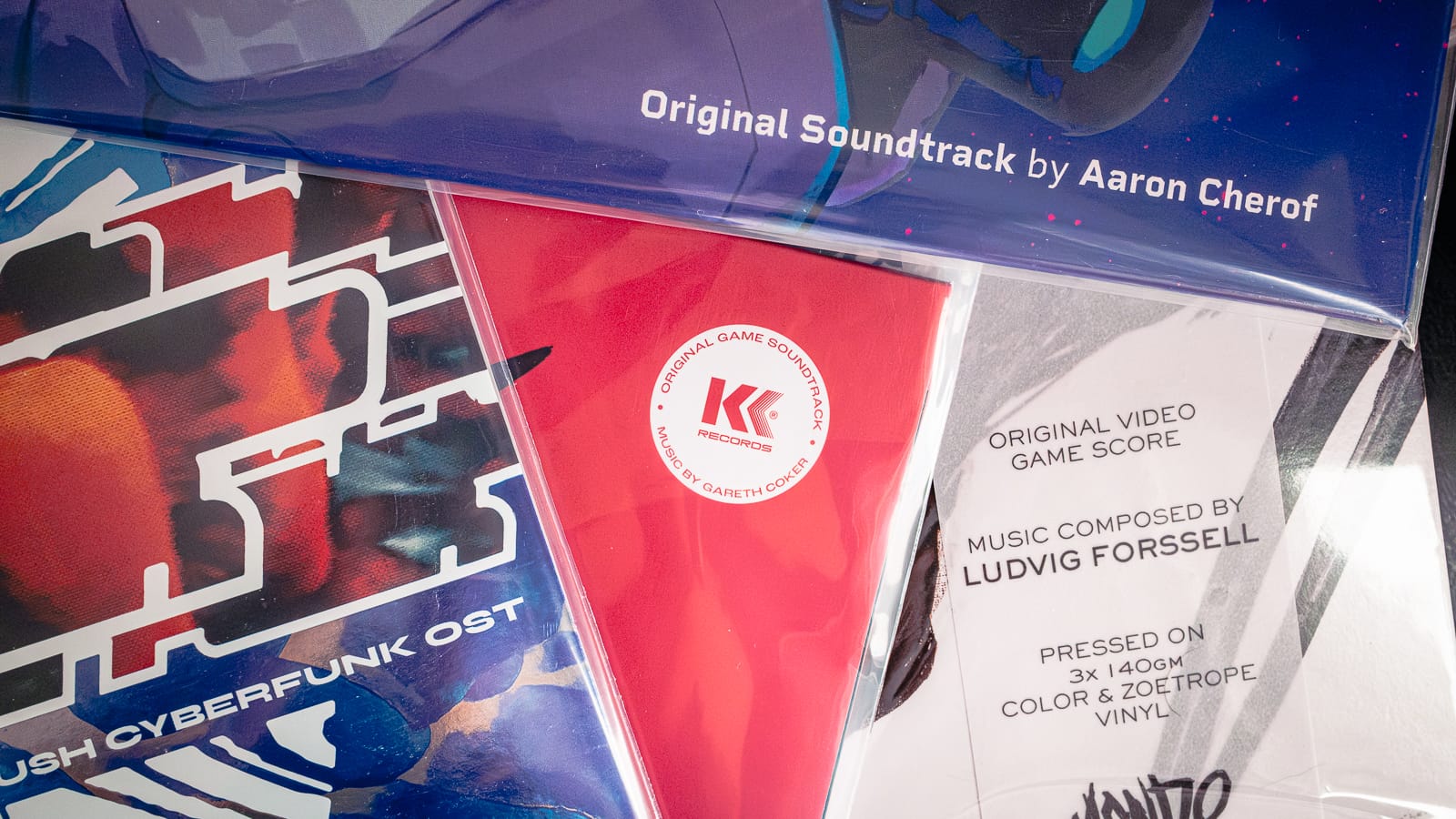
My first gaming crush of the year was MIO: Memories in Orbit. A gorgeous Metroidvania developed in Paris by the team at Douze Dixièmes, whose composer, Nicolas Gueguen, I had the chance to interview just as Kid Katana Records opened pre-orders for a stunning vinyl compiling the game’s soundtrack.
Yet before I even had the chance to receive my record, the studio shut its doors this past June. Unable to secure funding for their next game—even with a prototype well underway—the team was forced to call it quits.
"Whenever a game comes out, it’s always the same for me: glued to Twitch, experiencing it alongside the first people discovering it. It's always an intense moment," Nicolas Gueguen tells me via email. "Then the first numbers roll in, and it becomes obvious we won’t follow the same path as Clair Obscur. That’s when you feel the publisher start grinding their teeth."
Yet behind the scenes, work was already underway at Douze Dixièmes on what would come after MIO. "I had started digging in, we'd held a few meetings. I had all the design docs, and I was starting to work on the initial gameplay elements and set up a rough interactive music system," the composer adds.
Then, the phone rang. Focus Entertainment, which had owned the studio since 2021, didn't bite on the new pitch; the project was canceled and scrapped. With no other titles in the pipeline, Douze Dixièmes negotiated their independence from Focus so they could lay off their team on their own terms and offer them better severance and transition packages.
"Even if MIO wasn’t a massive hit, it wasn’t a flop either," Gueguen laments. "Closing down reflects a total lack of conviction and long-term vision [from the publisher]. It’s terrifying."
What’s equally terrifying is the state of the job market for video game composers. Think about it: work is drying up, while more and more people are looking for gigs. The market is getting bottlenecked, leaving junior composers competing against industry heavyweights and tempted to undercut them just to land a gig.
"it’s definitely harder to land new gigs today than it was five years ago."
"Finding gigs in games is brutally hard," Nicolas Gueguen sighs. "Back in March, I was working with three indie studios. By April, every single one had pulled the plug!"
A seasoned composer, who asked to remain anonymous for this story, confirms that "it’s definitely harder to land new gigs today than it was five years ago."
The culprit? The risk aversion mentioned earlier, coupled with shrinking budgets tightening the noose around studios already running on razor-thin margins.
"Studios take fewer risks, securing budgets is an uphill battle, and several projects I worked on—or was slated to collaborate on—have been delayed, downscaled, or shelved altogether for lack of funding," she explains. "For freelance composers, that injects a whole new level of uncertainty. A gig that looks locked in can end up being pushed back or vanishing into thin air."
"With all the studio closures, there are a lot of top-tier talents looking for work," Nicolas Gueguen worries. "At this point, I have to look into other industries and seriously consider a career change."

A career change is indeed a recurring thought running through the minds of many musicians.
That’s certainly true for Romain Raynal, another French composer and sound designer who recently worked on Don't Nod’s Aphelion. While he has been making music since he was five and pitching his skills to the games industry since 2021, he admits it is remarkably tough to stand out as a pure composer.
So, like many of his peers, he added another string to his bow: sound design. Wearing both hats makes his profile far more versatile, and therefore much more appealing to indie studios.
"The start of 2026 was catastrophic," Raynal recalls. "I was actively scrambling for a plan B. Then things picked up in June, and I’m fully booked through the end of the year. So far, so good... But having any kind of long-term visibility is tough. The industry is at a turning point; you really have to stay agile to make it through."
Another composer, who wished to remain anonymous, echoes the sentiment: "A lot of people are struggling in the industry, and there is a lot of uncertainty, as no one knows whether the crisis is temporary or if this is the new normal."
It’s an assessment shared by Thomas Brunet, the composer behind the brilliant Chants of Sennaar (Rundisc, 2023). Despite the game’s critical acclaim and hundreds of thousands of streams across major platforms, we haven't yet had the pleasure of hearing his work on another title.
"I’ve actually received a lot of requests since 2023, but very few projects had even the potential to get off the ground," he explains via email, noting this isn't always the developers' fault. "The huge issue all freelancers share is the lack of long-term visibility, especially right now."
While Brunet considers himself lucky to be "doing slightly better than most peers," he admits he has no idea what early 2027 has in store for him. That said, it has been confirmed that he will return to score the studio's next project.
Freshly nominated at the World Soundtrack Awards alongside UNBEATABLE and Crimson Desert, Cthulhu: The Cosmic Abyss is, much like MIO, an orphaned game. Released this past April, its studio, Big Bad Wolf, was officially liquidated in early September.
Composer Nicolas Garcia admits he had caught wind of rumors and wasn't entirely stunned when the news finally dropped. Still, he remains deeply disappointed: "A sequel was on the table, and I had already pictured the guest musicians I wanted to bring in. Above all, my heart goes out to the studio team who suddenly find themselves out of a job; they have my full support."
While earning a WSA nomination for his score comes under bittersweet circumstances, the composer views it as "the greatest tribute I could pay to everyone who brought this game to life."
As a prolific composer, Garcia can still lean on other industries to keep his head above water. But make no mistake: the grass isn't much greener on the other side. "Right now, 2027 is shaping up to be a mix of games, series, and film," he concludes. "I’m not complaining, but I still feel the climate is incredibly tense."
More than ever, networking and grinding to stay visible on social media seem essential for video game composers.
I caught up with VOLA Default, the producer and sound designer who broke into the industry with the mesmerizing Metal Eden. Since the game dropped last year, hot on the heels of the soundtrack hitting streaming platforms, she’s been relentlessly experimenting with new formats online—pulling back the curtain, breaking down her creative process, and even spinning her tracks in clubs to push them beyond the gaming sphere.
All that hustle finally seems to have paid off: she just told me she’s been tapped for an exciting new VGM gig—one she couldn’t share any details about yet, due to an NDA.
Building an active presence on social media, lifting the curtain on your creative process, and showcasing the full scope of your skills to stay visible in an algorithm-driven landscape certainly looks like a winning formula for Alpha Chrome Yayo.
The Belfast-based composer made waves last year with the irresistible Promise Mascot Agency, and he now posts daily Instagram Reels offering a behind-the-scenes look into his composition work, or simply jamming out on his massive collection of instruments and analog gear.

When reached for comment, Alpha admits that "in a wider industry sense, stability and morale are often at a low ebb," but he refuses to let it get him down, marveling at the incredible games continuing to come out almost daily—even from badly bruised studios.
"Games have always felt magical to me, but seeing INCREDIBLE releases come out every day is exceptionally uplifting and nothing short of a miracle, born of talent and tenacity. The best middle finger to all the bullshit and those who enable it."
The composer considers himself lucky and thrilled to be working on a string of exciting projects—most notably the upcoming title from Polygon Treehouse, creators of Röki and Mythwrecked. He also praises the community's mutual support, which, in his experience, easily trumps competition between peers.
"Solidarity goes a long way, and it's INCREDIBLE seeing the real-world impact with stuff like the United Video Game Workers’ Game Hardship Fund and Itch bundle," he tells me. "THAT’S what the games industry looks like at its best."
That said, Alpha also points out that being a pure composer is likely no longer enough to land new gigs. Much like VOLA default I mentioned earlier, broadening your skill set with sound design and audio integration—becoming a veritable Swiss Army knife—drastically boosts your chances of appealing to small teams operating with limited hands and tight budgets.
"I think it's a valuable skill to have no matter where you are situated or what you're working on," adds Alpha Chrome Yayo. "Plus, sound design is FUN! Creating each sound is like solving a little puzzle. Like, how do I build this from scratch, what's going to serve the game best, what's going to feel good for the players."
Fleshing out your skill tree is also a way to become a better composer. That’s at least the hope shared by an anonymous composer who spent her year focusing on sound design and voice direction.
"I’d love to become an audio director someday, so I was looking to get more hands-on experience with audio implementation. I picked my recent projects with that mindset, and I hope it makes me a better composer as a result."
While she feels fortunate to be working on long-term projects right now and "doesn't have her finger on the industry's pulse at the moment," she still laments how bleak things look across the board: "Our industry has taken far too much damage over the last few years."
“I am nervous for new people joining the industry, for my friends who have lost their jobs, for my colleagues who have been searching for that next gig for months, if not years.”
Sometimes, keeping your head above water while everyone else is drowning just breeds survivor's guilt.
British composer Gina Loughlin, whose work you might have heard recently in the lovely Wax Heads, almost sounds apologetic for still having gigs lined up: "In a way though, I feel guilty that I am doing okay, when so many people around me are not. So many friends and colleagues are feeling the impact of wide-scale layoffs and the surrounding uncertainty, and there's no logical reason that I am doing okay and they are not."
Imposter syndrome spares no one, not even seasoned composers. But this isn't false modesty; Gina is genuinely worried, especially for the next generation breaking in.
"Every time I get close to a project ending, I'm worried that it will actually be the end of my career as a whole and I'll have to go back to hell (retail). I am nervous for new people joining the industry, for my friends who have lost their jobs, for my colleagues who have been searching for that next gig for months, if not years."
Going through a layoff can completely reset the deck and leave a lasting mark on those affected—all the more so when it hits out of nowhere, in full panic mode and without warning.
Fernando Cabrera composed the original soundtrack for ZERO PARADES: For Dead Spies, one of the most promising spiritual successors to Disco Elysium, coming straight from the very same studio, ZA/UM.
Yet its entire in-house audio team—most notably Mirella Diez, senior audio designer and vocalist behind the game’s songs under the moniker Ella Norte—was let go alongside 32 other employees this past July. Plans for additional music were instantly scrapped, stripping Fernando of what would have been a great gig.
"I haven't been able to get a new gig yet, not in the near future at least," the Madrid-based composer explains. Clear-eyed, he knows all too well that summer isn't the easiest time to land on his feet. With everyone away on break, getting a reply to pitch emails is an uphill battle.
"It's true that we're in the middle of summer and normally things get very quiet, but the general feeling is not good, to put it mildly."
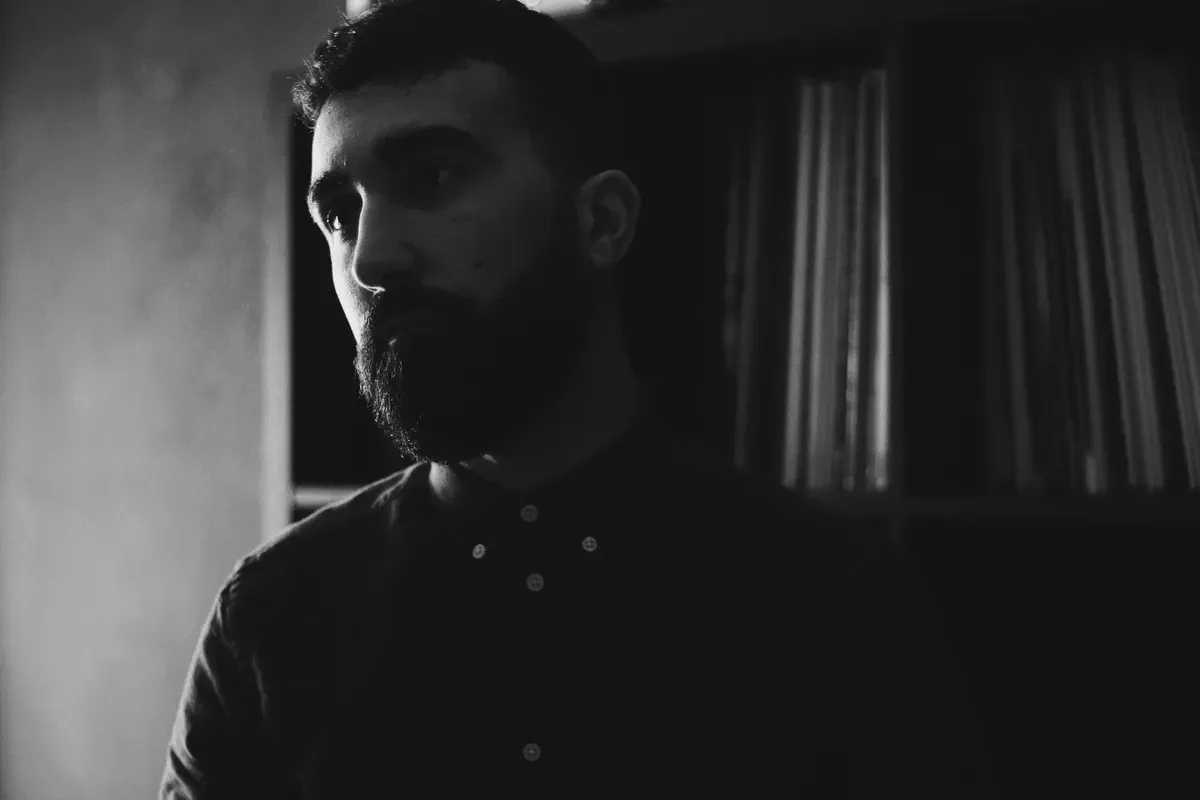
In his eyes, the industry's top money men are driving the entire sector straight into a wall out of pure corporate greed. An insatiable appetite and unattainable targets that simply devalue every link in the creative chain.
"Developers and consumers are no longer seen as something worth taking care of," Fernando Cabrera sighs. "This is very noticeable in audio and music," he adds, feeling that the craft is still looked down on by certain leads and directors.
While the layoff was a bitter pill to swallow, Fernando knows what he brings to the table and chooses to stay positive. And while he admits to being open to opportunities across TV, animation, or film, video games remain his true creative home.
Fernando is right to stay positive, because silver linings still exist.
Recent weeks were marked by the shutdown of French studio Midgar, which was hard at work on the ambitious RPG Edge of Memories—the sequel to Edge of Eternity—originally slated for release late this year. Mioune isn't a composer, but a vocalist whose voice you’ve likely heard in Temtem, or on YouTube, where she has been posting vocal covers of countless OSTs for nearly two decades.
Humble as ever, Marion (her real name) tells me she isn't "in high demand just yet." She considers herself lucky simply to work with fully independent studios that self-fund their titles or rely on crowdfunding to keep the lights on. Meanwhile, her longtime collaborator, composer Cédric Menendez, launched his own music production company, and she would love to keep working alongside him through that avenue.
On top of that, publisher Nacon recently announced that despite Midgar’s closure, Edge of Memories will indeed drop on November 5. "Maybe that will open a few doors for me," Mioune hopes as we wrap up our conversation.
The industry's poor health can also trigger a perverse ripple effect that is often tough to see from our side of the fence. Several people I spoke with mentioned noticing a distinct shift in the contracts landing in their inboxes, or the payment terms being forced on them. To make ends meet, many are left with no choice but to compromise.
Gina Loughlin views this shift through the lens of shrinking project scopes: "Something I've noticed is that the work I've been offered more recently is typically shorter-term, on projects with smaller budgets and quicker turnaround times."
“I've sometimes taken on work that is below my ideal rate or signed contracts that may not have the most favourable terms, in exchange for some kind of stability.”
This seems to stem from studios trying to make themselves more attractive to publishers and qualify for potential grants. While Loughlin finds that logic understandable, it carries real consequences for studio pocketbooks: "It has meant that budgets across disciplines are getting squeezed in order for games to be desirable to publishers. Because of this I've sometimes taken on work that is below my ideal rate or signed contracts that may not have the most favourable terms, in exchange for some kind of stability."
Another composer who asked to remain anonymous echoed this industry shift: "In those situations, I agreed to take a haircut on my usual day rate, but in exchange, I negotiated 50% of the net revenue from digital streaming (Spotify, YouTube Music, etc.), alongside 50% of direct soundtrack sales."
Nicolas Garcia strikes a similar chord: "I feel like payouts are generally trending down, but that won't stop me from writing music and adapting to the budget to best serve the game—within reasonable limits, of course."
Greater independence, direct backing from passionate players, leaner budgets fueled by boundless heart and imagination… that might just be the secret to staying afloat in these turbulent times for the games industry.
You’ve probably already clocked it: AAA studios rarely keep in-house composers on the payroll these days. For years now, giants like Electronic Arts, Ubisoft, and Sony have tapped Hollywood heavyweights to score their flagship titles (just look at the recent Marvel's Wolverine or Marathon), while Microsoft routinely outsources to specialized production houses like Finishing Move.
For the thousands of freelancers out there, landing a full-time staff role at a studio isn’t even necessarily the goal anymore. Either way, that beacon of stability has done nothing but flicker over the past two years.
Being freelance isn’t a thorn in your side; it’s an asset, a real strength that pairs brilliantly with the sheer diversity of what video game music has to offer.
And guess what? Just because sharp-toothed sharks with bottomless pockets have decided to stop showering the gaming industry with cash doesn’t mean people are going to stop making games. Quite the opposite: we’ve never had so much incredible, top-tier work right at our fingertips.
For indie composers, the real threat lies elsewhere: watching a contract slip through their fingers simply because an opportunistic studio would rather hand over the music to those two little letters financiers are obsessing over right now: AI.
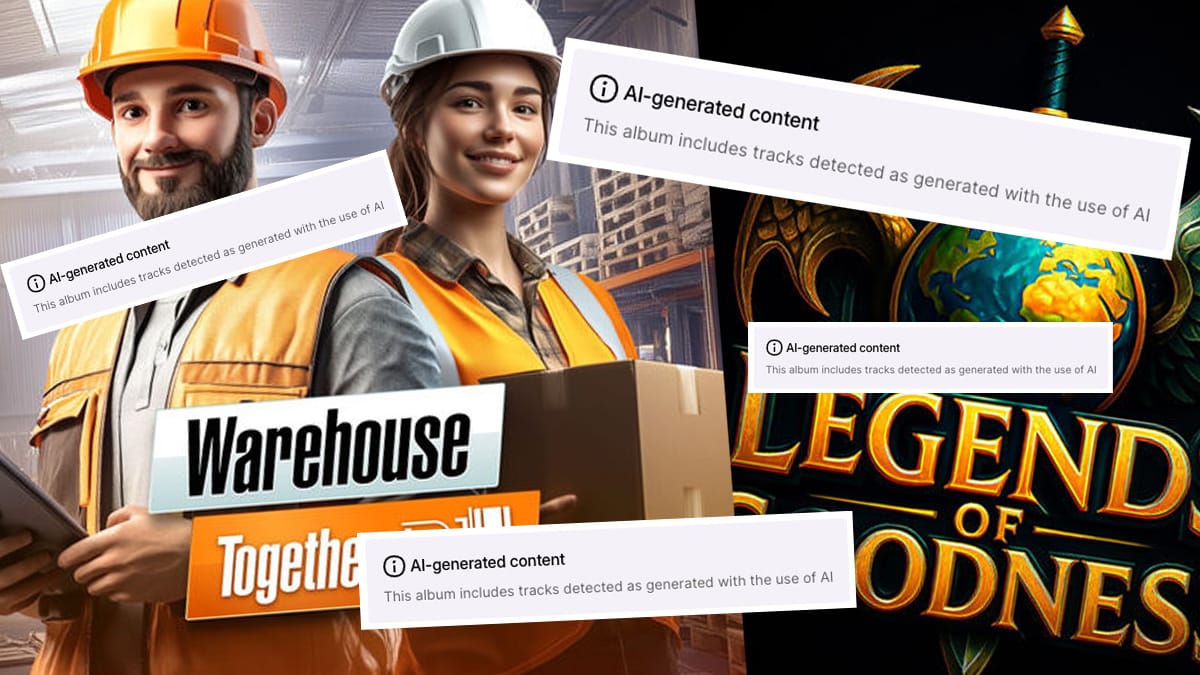
Fortunately, even as I notice a slow but steady trickle of AI-generated OSTs landing on streaming platforms, plenty of indie studios are fiercely pushing back against the tech. Many go so far as to spell it out explicitly right in the contracts they sign with composers and sound designers.
Alpha Chrome Yayo is grateful to work with teams that make it a point of pride to ensure every creative is on the exact same page: "Almost every contract I've signed in the past year has a clause basically saying 'none of us will use gen AI anywhere in this project.' And every time I see that, I am EXTREMELY happy!"

Support independent VGM journalism
NOWPLAYING is a publication dedicated to video game music news and the people who make it. If you enjoy my work, consider making a donation — it makes a real difference.