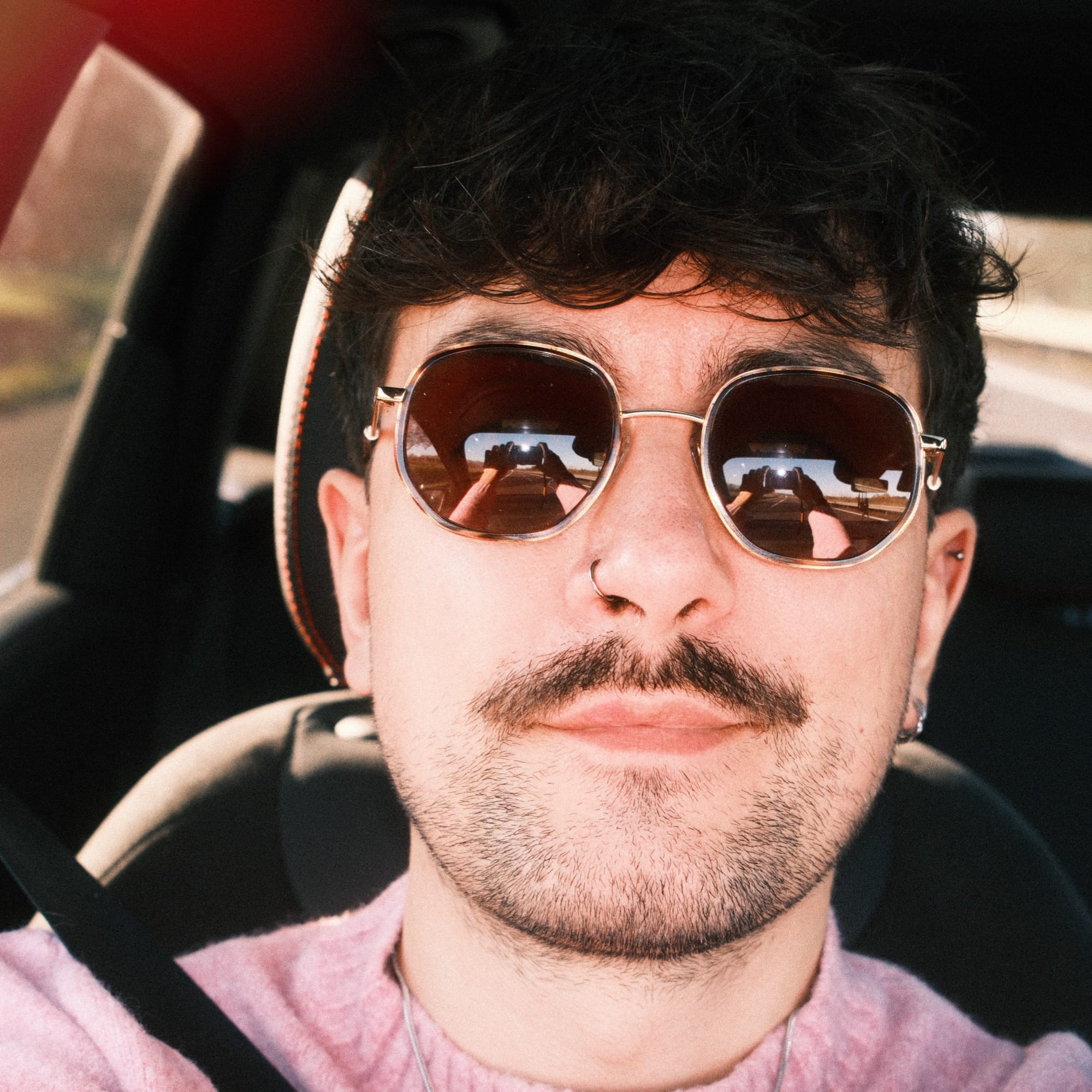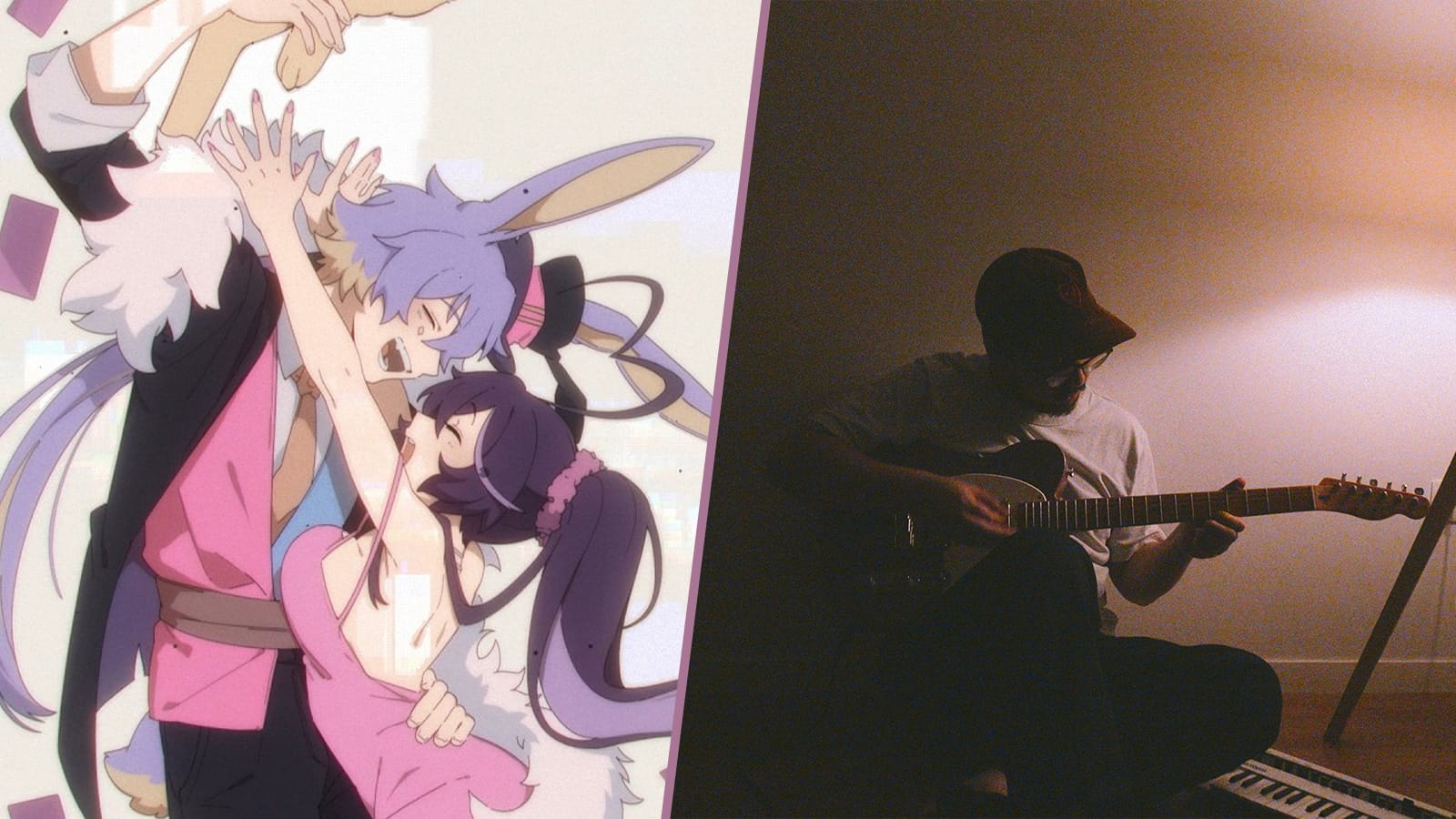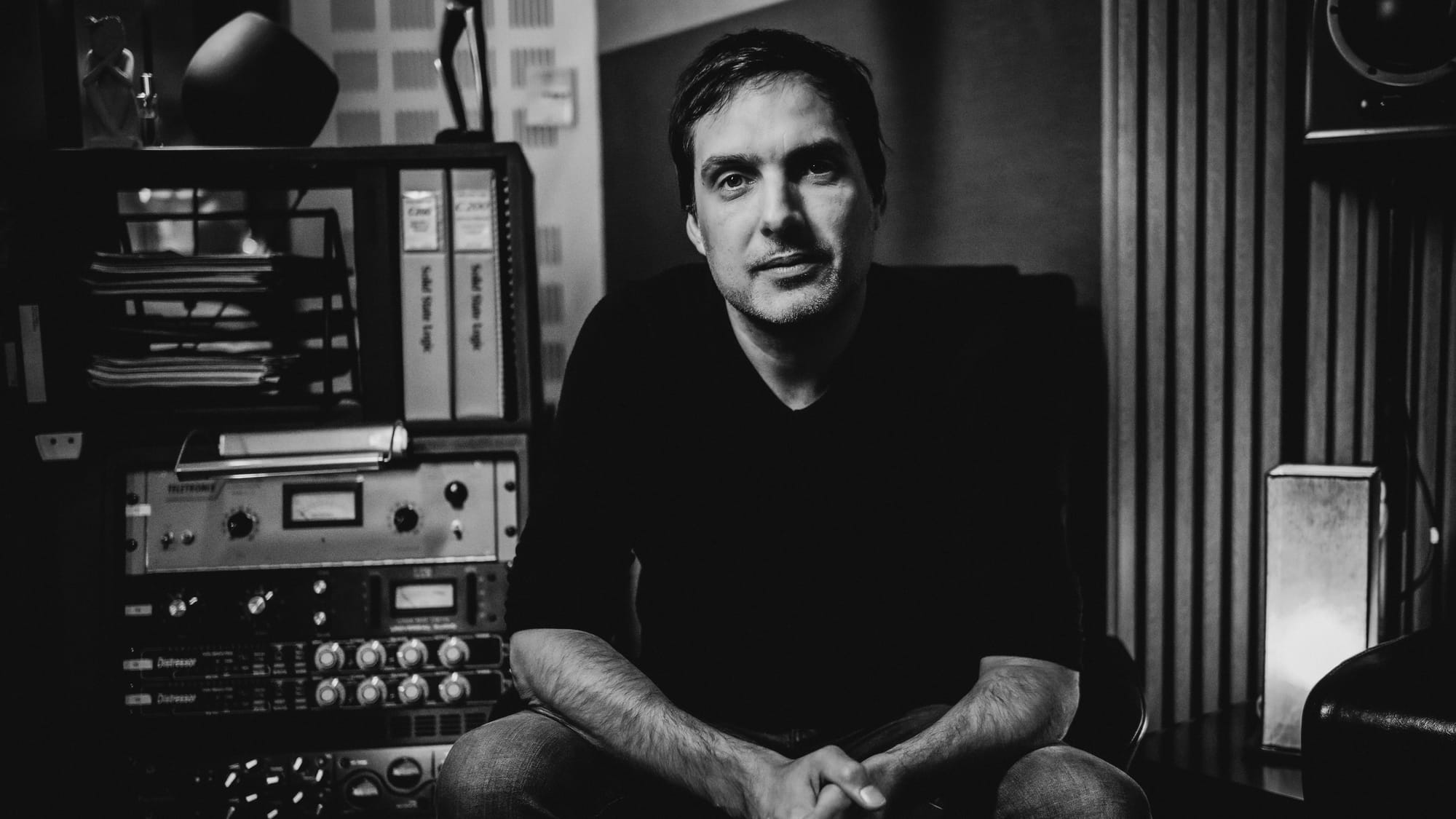
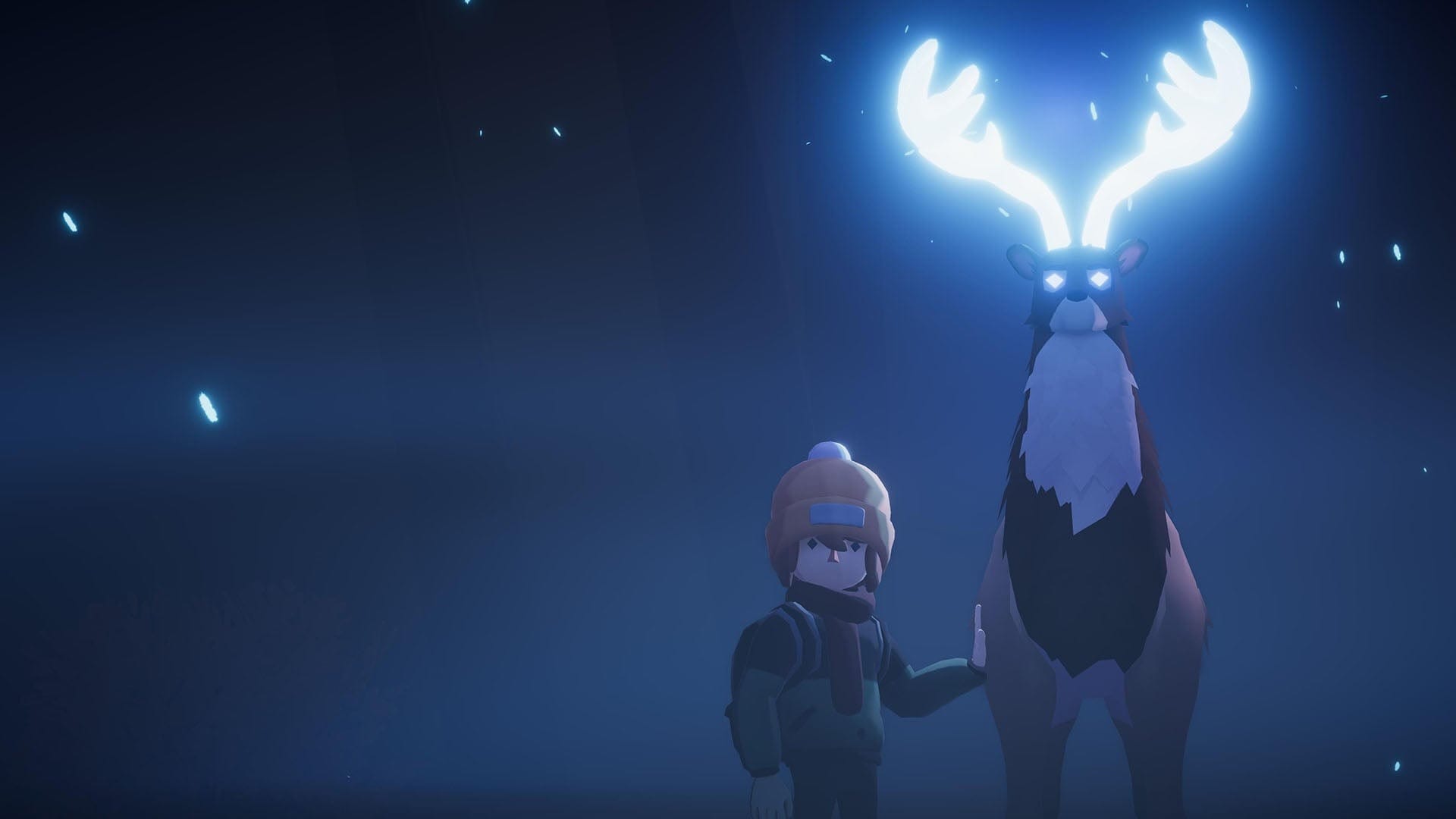
Sometimes, a game trailer alone doesn't quite convey its true intent. That was my impression of Deer & Boy, the debut title from Paris-based studio LifeLine. When I first saw footage of it four years ago during the AG French Direct, I merely saw a polite, on-rails Planet of Lana—a game whose plot and ending could be guessed in minutes. Yet, listening to its soundtrack last week told a completely different story. While you can find highly candid orchestral tracks reminiscent of childhood cartoons, it’s the duality of the pieces that surprises. Some tracks are genuinely chilling, establishing a mysterious, unsettling atmosphere. What if Deer & Boy had something else to say?
Since then, I’ve bought the game, and I can confirm that LifeLine has delivered a truly singular cinematic platformer; academic yet inspired, touching but never cheesy. It’s a matter of balance, ultimately, which owes a great deal to Corentin Brasart’s music. Naturally, I reached out to him to get a look behind the scenes.
Corentin, thank you so much for accepting my invitation. Could you tell us a bit about yourself and your background as a musician before we dive into the heart of the matter? How did you get into video game composition?
Corentin Brasart: Thanks for having me! To start with, I’m lucky enough to have two musician parents; my mother was a pianist before becoming a dance teacher, and my father was a bassist before becoming a composer/arranger, then a music educator. I think that played a huge part in my sensibility and in the realization that "this is a real job, and I can do it!".
I started making music on computers back in middle school. I was a massive Daft Punk fan and wanted to do exactly what they did (a miserable failure), but I was also into sample-based music in general. I listened to a lot of the French House revival at the time (Kartell, The Phantom’s Revenge, Cherokee, Louis La Roche…), but also a good dose of trip-hop (DJ Shadow, Chinese Man, Wax Tailor…) and instrumental hip-hop like Nujabes. I was completely fascinated by the idea of creating something new out of pre-existing sound materials!
After high school, I hesitated between sound and cinema. I initially chose a cinema degree at La Sorbonne Nouvelle, but I wasn't really thriving there. I ended up quitting to join the Music & Sound Design program at ISART Digital in Paris. That’s where everything really clicked for me, and I also discovered a passion for sound effects.
In my final year, I was lucky enough to be contacted by Anthony Jauneaud, a long-time friend, to pitch for a small project that was just starting development back then: Night Call. I got the job, and that allowed me to keep working as a freelance composer & sound designer ever since!
How did you get in touch with the LifeLine team? Is it common for you to help emerging studios release their debut games? (I'm thinking of Decarnation, Tales Up, Flat Eye…)
CB: LifeLine and its creative director, Jayson Houdet, contacted me in September 2025. They needed to restart the project’s musical direction from scratch, and there was very little time left before the release, which was planned for a bit earlier than June 2026 at that point. We jumped on a call so he could present the game, we hit it off immediately, and I started working pretty quickly after that.
I hadn't really thought about the fact that I regularly work on debut games for emerging studios, but looking back, it does happen quite often! I think it comes down to two things:
Creative industries rely heavily on recommendations to build trust between people, and I feel that’s even more true for music. Emerging studios also have a greater need to build these new professional relationships, unlike veteran studios where connections are already established. That was the case for Decarnation, Tales Up, or Deer & Boy, for instance. This doesn't mean we start working together right away; there’s often a recruitment process or a pitch with several composers, but it creates a first point of contact.
Secondly, my career is relatively young (I started working around 2017-2018), so studios' first projects often match the budding level of experience I had at the time. Flat Eye, for example, was Monkey Moon's second game after Night Call. When a project goes well and schedules align, it’s common to work with the same teams again.
How was Deer & Boy presented to you? Did you feel instantly inspired by the project?
CB: Jayson presented the project quite conventionally, talking about the creative intentions behind the game's creation and its narrative. He told me about his vision for the music, and we discussed what I had in mind on my end for the sound direction.
The unique thing about this project was that I came in very late in production, practically during the final stretch before release. The downside was that we had very little time to think about dynamic music systems, compose the music, and test it in-game. But the advantage was that the game was already completely finished—or nearly so—visually and mechanically. It was very easy to project myself into it using the game's visuals or the pacing of a sequence. Often, you start composing by imagining things through concept art, untextured levels, or a conceptual sequence. On Deer & Boy, I could be "in situ" right away, which helped me quickly compose cues that matched the game's various environments.
I was inspired very quickly by the project just from its graphic style; the game is visually gorgeous, which instantly makes you want to dive in! It’s also always a pleasure to write music for projects where narrative is central. It's creatively stimulating and allows you to create music that drives the project forward. Finally, Jayson proposed a sound vision that perfectly aligned with what I love to create: a mix of cues with ambient and electronic pads, combined with orchestral instrumentation to closely follow the journey of the young boy and the deer. The joy of this kind of project with someone as talented as Jayson is that once the first bricks of the musical direction were laid, I had broad creative freedom to implement the ideas I had in mind. There’s nothing more inspiring than that kind of mutual trust in a creative partnership!
If I'm not mistaken, Deer & Boy is the first cinematic platformer you've composed for. Is it a genre you are particularly fond of?
CB: It is indeed the first cinematic platformer I’ve worked on! I don’t know if I’d say I’m particularly fond of the genre itself, but as a player, I really enjoy games where narrative is the pillar of the experience, whether they are cinematic platformers, walking sims, or similar genres. On the cinematic platformer side, I was deeply marked—like many people—by Limbo and Inside. In my personal experience, they brought a totally new way of thinking about game direction, while offering a sound direction that was both strong and fresh.
The game design of Deer & Boy brings to mind obvious references like Inside, Planet of Lana, or Little Nightmares. I imagine you had to study what your fellow composers did on those games before tackling the music?
CB: Regarding musical creative direction, the only cinematic platformer we referenced was Inside. That was actually Jayson's most important starting point; he didn't want the soundtrack to be solely orchestral. He really wanted segments where the music blends into the background with discreet atmospheric pads, though obviously adapting the intent so it sounds less horrifying and stressful than Inside.
I didn't really listen to Little Nightmares because the projects felt too far apart thematically to reference ideas. I did listen to the Planet of Lana OST, which I love, but it served more as a counter-example: the orchestral direction there is very "grand," with a sense of scale and epicness that would have been too overwhelming for Deer & Boy. We wanted to stay at shoulder-height with the two young protagonists, rather than accompanying the gigantism of the environments or the narrative surrounding them.
Among game music references, I went back to the two Ori soundtracks by Gareth Coker, which are masterfully composed and offer a beautiful balance between light and dark—an oscillation you can find in Deer & Boy. Otherwise, we drew from film references, since the game feels a lot like an animated movie. Jayson specifically mentioned John Powell’s How to Train Your Dragon for the relationship between the boy and the dragon, and Stranger Things for sequences where we needed more pronounced electronic textures, without "dating" them to the 80s like the show does.
Aside from perhaps the two volumes of Tales Up, the Deer & Boy OST is the longest you’ve composed for a game (at least in terms of track count). Paradoxically, it might also be the shortest game! Much like the gameplay, the music seems to enrich itself as we progress, as if it evolves to mirror the relationship between the two characters. Was this requested, or did it just feel natural to do?
CB: Yes, I wrote a lot of music for Deer & Boy, and there’s still a good 20 to 25 minutes of music that didn't make it onto the OST release. Without the project's time constraints, I think there was room for another thirty minutes of music!
The main reason for this is that the game is barely systemic: there are very few places where it would make sense to reuse music (like a combat or exploration theme). The environments and situations change constantly throughout the game, so unique sound material was needed almost everywhere, much like scoring a film.
Regarding progression, yes, it was both requested and natural for the music to evolve with the protagonists. Thematically, the relationship between the little boy and the deer changes greatly throughout the game, and we needed to highlight those deep shifts: the initial encounter, the budding friendship, the fluctuating codependency... And instrumentally, because the work transforms visually quite strongly across the adventure, we had to translate the radical nature of certain atmospheric changes into the sound as well.
The music of Deer & Boy splits between enchanting, candid orchestral tracks and mysterious, sometimes heavy electronic tracks. Do you enjoy this kind of duality?
CB: Yes, it’s very pleasant to have access to a wide palette of tones and instruments when writing a soundtrack. You have to be careful to frame the sounds you choose to avoid going all over the place, but it also allows for great freedom in how you approach scenes. Since I enjoy composing in both genres equally, it’s perfect for me!
I know your love for electronic music, especially Tangerine Dream. We can actually find traces of them in 'The Quiet Echoes of Abandoned Spaces'. Is it a challenge you set for yourself, to quote them in each of your OSTs?
CB: Hahaha [reading this question made me laugh out loud], I know we jokingly said that in each of my OSTs, there was at least one track referencing Mass Effect or Tangerine Dream… but honestly, that wasn't the case for Deer & Boy, at least not intentionally! I think it’s simply that I love those sounds and tend to gravitate toward them naturally.
I mentioned this to you off-record: I'm a big fan of the track 'Path to Closure'. Can you tell me a bit about how that track came together?
CB: This track comes in at a moment of introspection for the boy in the game; the primary intention was obviously to fit the narrative at that specific point. We had to find something dark and heavy with gravitas, but at the same time, it shouldn't feel anxious or negative—it needed to keep a bright aspect and a sense of moving forward.
As is often the case for this kind of ambient atmospheric track, I work with a video capture of the gameplay sequence looping on a second screen to find a drone or texture that fits the game environment perfectly. Once I find that foundation, I try to develop the composition across different layers before refining the arrangement later on.
The element I love most in this track, which came quickly and carried the rest of the writing, is the repetitive sound that rings almost like a large bell, coming and going throughout the piece. I love its timbre, and I find it brings something solemn that anchors the track in its environment.
For the record, two of the influences I thought about while writing this track, and more broadly for the game sequence it’s in, were Jonathan Glazer's The Zone of Interest soundtrack ("Ears First"). I was totally blown away by the music (and the movie, obviously). There’s a bit of that darkness I wanted to capture here, but also the repetitive aspect, the sound texture, like a scratched CD degrading, which made sense to me given the sequence in our game.
The other, more surprising influence is... the OST of the first Drakengard ("Twelfth Chapter - In the Sky"), which I discovered very recently without having played the game. It completely blew my mind, and I’ve been listening to it a lot since. It shares the same thematic desire for a repetitive, strange structure with simple, recognizable elements and the ambiguous emotions that these kinds of textures provoke.
Your turn to tell me about your favorite track: which piece are you most proud of?
CB: I’m going to cheat (sorry) and give you two (and a half):
The title track "Deer & Boy" [featured above], which contains the main motif of the game. I’ve always wanted to write a theme like that, and it’s the first time I’ve had the chance to work on a game that allowed me to do it, so I’m thrilled!
The diptych "Deep Underground" / "The Quiet Echoes of Abandoned Spaces", which are actually the arrangements of all the ambient layers from one single sequence. I love when video game music gives the feeling of inhabiting a space, and that’s what I tried to do here.
Deer & Boy is a silent game, and its music is instrumental. However, it also features two beautiful songs produced by Quentin Malapel and performed by Louise Dissous. I’m curious to know what motivated this departure from the main musical direction.
[Corentin asked the person concerned directly for this question, thanks to Quentin for his answer!]
Quentin Malapel: Thanks for the question, Pierre, and thanks to my friend Corentin for letting me take this one. I came onto the project a bit after Corentin, mainly to handle the integration of the interactive music and the sound design for the game's numerous cutscenes. Jayson initially aimed to collaborate with an artist he really liked to write a song for one of the game's landmark cutscenes. Unfortunately, for a variety of reasons, that didn't work out. We had to find a solution. Since Corentin was already buried in writing the OST and time was running short, I offered to write and produce the songs myself, alongside my friend Louise Dissous. Louise and I have been friends since we were in the same band over fifteen years ago, and we often talked about collaborating again. This was the perfect opportunity to reunite. By blending her talents as a singer and pianist with my experience in songwriting and video games, plus Corentin’s delicate orchestral arrangements, we wrote, composed, arranged, recorded, and mixed these two songs in a very short window of time.
The two songs appear at two crucial moments in the game: "I Am By Your Side" plays during a cinematic montage where the deer and the boy grow up together, inspired by The Lion King and Brother Bear. "The Words I'd Wish to Say" plays at the very end of the game, bridging the final cutscene and the credits.
The two tracks were written as mirrors of each other. The first is carefree and light, featuring a bright orchestration driven by an open-tuning guitar, with lyrics calling for adventure—the deer reassuring the boy, finding the courage to move forward through this new friendship. The other is more solemn and intimate, a stripped-back piano-vocal piece, singing those words to the boy like a comforting lullaby.
Are you a big gamer yourself? Are there any soundtracks that have left a mark on you recently?
CB: I play quite a bit, yes, though not as much as I’d like… I mentioned the Drakengard OST earlier, which is absolutely brilliant in the radical nature of its proposition—I’m crazy about it!
Recently, I finally played Abzû, and it’s obviously phenomenal (like everything Austin Wintory produces).
I’m a fan of the series and really enjoyed the new tracks and arrangements in Persona 3 Reload. More recently, I fell in love with the sweetness of the Hozy OST by Yann van der Cruyssen, whose work on Stray I already liked a lot. Finally, I’d also highlight the fantastic instrumentation of the Herdling OST by Joel Schoch.
I visited the VGM exhibition at the Philharmonie de Paris the other day, and your OST for Night Call is actually featured in one of the videos shown in the central room. Is it a source of pride that your work can be appreciated by a curious general public rather than just passionate connoisseurs?
CB: It’s truly an immense source of pride. I had been approached by the exhibition organizers a few months ago about the possibility of Night Call appearing there, but hadn't received any confirmation since. So I jumped for joy when reading your question and learning that you can actually see the game there! I plan to visit the exhibition during the summer, once we can step outside again without being instantly vaporized by the sun, and I can’t wait to see Night Call in it!
Let's finish with some recommendations. What are you listening to at the moment that isn't VGM?
CB: I recently discovered the shimmering funk of Antoine Bourachot with "Sailing Away" and "Ace", which perfectly accompany late summer evenings with a warm breeze and cold drinks.
Along the same vibes, there’s the track "Floating on Silence (Panorama Version)" by Tour-Maubourg Ensemble, which reminds me of the best days of St Germain, and "Jazzed Up" from Bellaire’s recent debut album to keep the night going—its bassline will have me dancing until retirement.
To try and keep it brief, I'll just mention the minimalist electronic album In Parallel by Salamanda, which I discovered recently and really enjoy, especially the tracks "Paper Labyrinth" and "Sun Tickles". On the jazz side, anything produced by HARRISON: his single "All About Us" and his recent album Quiet Miles. And finally, on the pop side, right now I’m completely hooked on the production of the chorus in the track "NAIL" by YVES!

Support independent VGM journalism
NOWPLAYING is a publication dedicated to video game music news and the people who make it. If you enjoy my work, consider making a donation — it makes a real difference.