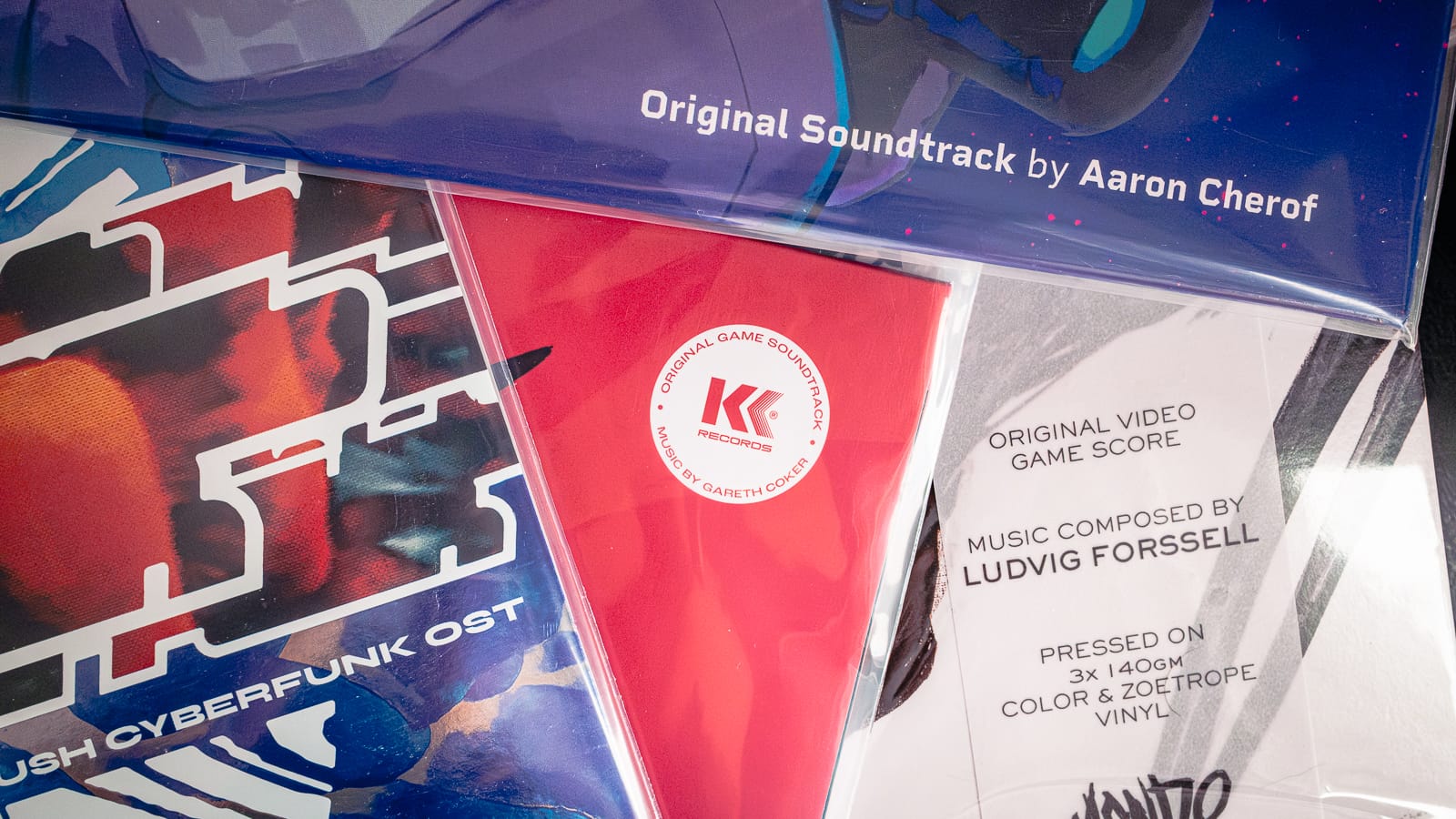
I've been tracking VGM releases on the internet for four years now, and I’ve seen a dizzying array of naming conventions for original soundtrack albums.
"Soundtrack", "Original Game Soundtrack", "Official Game Soundtrack", "Score", "Official Score", "Music From…". In Japanese releases, I even regularly spot "Sound Track" or "SoundTracks"—sometimes with parentheses, sometimes without, and sometimes trapped inside weird brackets like 「this」. Clearly, there are no rules.
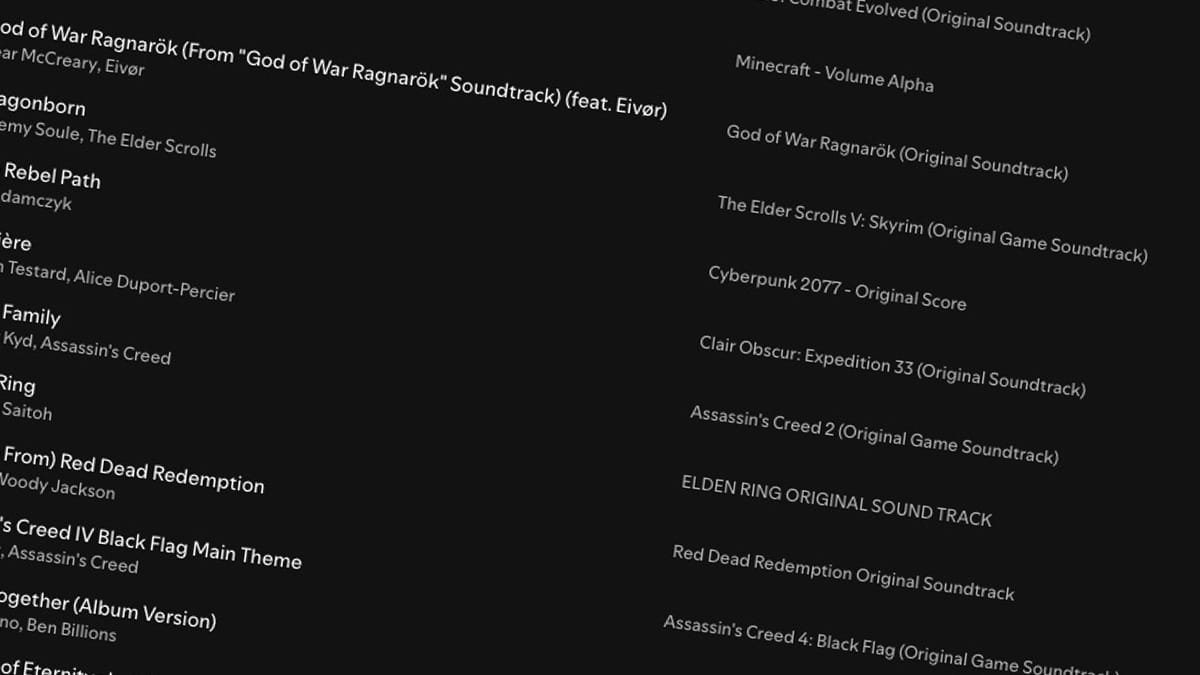
You only need to glance at Spotify’s official "Video Game Soundtracks" playlist to see the chaos. It’s a complete potpourri where everything I just mentioned coexists, alongside plenty of other variations. Just look at this example: the soundtrack for the game The Last of Us doesn't carry any label on streaming platforms. Yet, its artwork clearly specifies 'Original Score.' On the other hand, The Last of Us - Vol. 2—the second volume of the first game's soundtrack—is categorized as 'Video Game Soundtrack' on those very same platforms.
Intrigued by this beautiful mess, I decided to knock on a few doors. I wanted to understand how studios, composers, and labels actually choose to name their soundtracks when pushing them to streaming platforms.
A Fuzzy Distinction
In the film industry, things seem a bit more straightforward. I always assumed that an "original soundtrack" gathered the songs used throughout the movie, while the "score" represented the instrumental tracks specifically composed to serve as a backdrop. For instance, we easily differentiate the score Tyler Bates composed for Guardians of the Galaxy from the Awesome Mix albums, which compile Star-Lord’s favorite tracks.
But even in cinema, directors like Quentin Tarantino blur the lines. The Reservoir Dogs Original Motion Picture Soundtrack features both licensed tracks (like Stealers Wheel’s iconic "Stuck in the Middle with You") and original audio snippets from Harvey Keitel and other cast members. The same goes for The Big Lebowski, where an original track by Carter Burwell slips right in among hits by Nina Simone, Bob Dylan, and the Gipsy Kings. In short, we haven't even scratched the surface of video games yet, and we’re already lost.
What’s even weirder is that composers themselves don't seem entirely sure of the exact definition separating a "score" from an "original soundtrack". Take the 2022 game We Are OFK, which perfectly illustrates this duality.
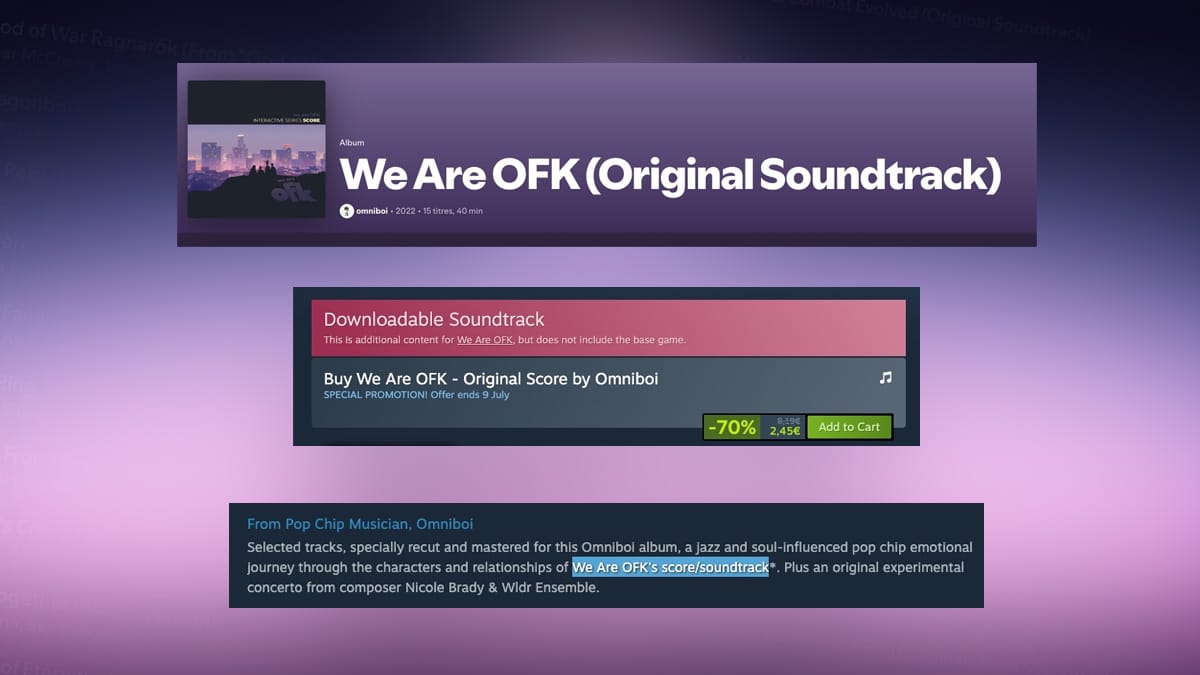
The game, created by Teddy Dief, dives into the origin story of a virtual pop band called OFK. Naturally, original songs were written for the occasion and compiled into an EP simply titled We Are OFK on streaming platforms. However, on Steam, the exact same album is listed as We Are OFK - Pop E.P. by OFK. On top of the vocal tracks, the game features instrumental pieces used as background music. Composed by Omniboi, these are grouped on Spotify under We Are OFK (Original Soundtrack). But on Steam, that very same album becomes… We Are OFK - Original Score by Omniboi. The terms are swapped with no apparent reason, as if there were no difference at all.
Award-winning composer Christopher Tin somewhat confirmed this to me. The maestro behind the Civilization themes recently released the soundtrack for Aether & Iron, which I highly recommend checking out. The album is labeled as an "Original Video Game Soundtrack" on his artist page. But what actually differentiates it from the music he composed for Old World, which is categorized as a "Score" in his discography?
“I'd say a score only refers to the background music composed by composers like me, whereas soundtrack often refers to collections of licensed songs used in a game (like in GTA),” he told me during on Instagram. Yet, he acknowledges how porous the terms are, admitting that “soundtrack could also refer to background music composed for the game, or a mix of both background music and licensed songs.”
Different Names to Avoid Confusion?
Since I was still in the dark, I reached out to the people whose actual job is to worry about these details. Laced Records is one of the biggest video game music labels around. Every year, they press dozens of soundtracks to vinyl and help major studios distribute their music digitally. I was particularly curious because Laced recently handled the release of Hitman: World of Assassination on both vinyl and streaming platforms. They labeled it a "Score", even though the soundtracks for the previous games in the series are all called "Original Soundtrack" on Spotify.
“[Game Name (Original Soundtrack)] tends to be the conventional title across vinyl and digital; however, we'll sometimes get a request for a specific title,” Tom Quillfeldt, A&R and Production Manager at Laced Records, explained to me. “That could be because of the personal preference of the composer, for instance, or to ensure that the soundtrack album can't be confused with a show or movie soundtrack within the same IP.”
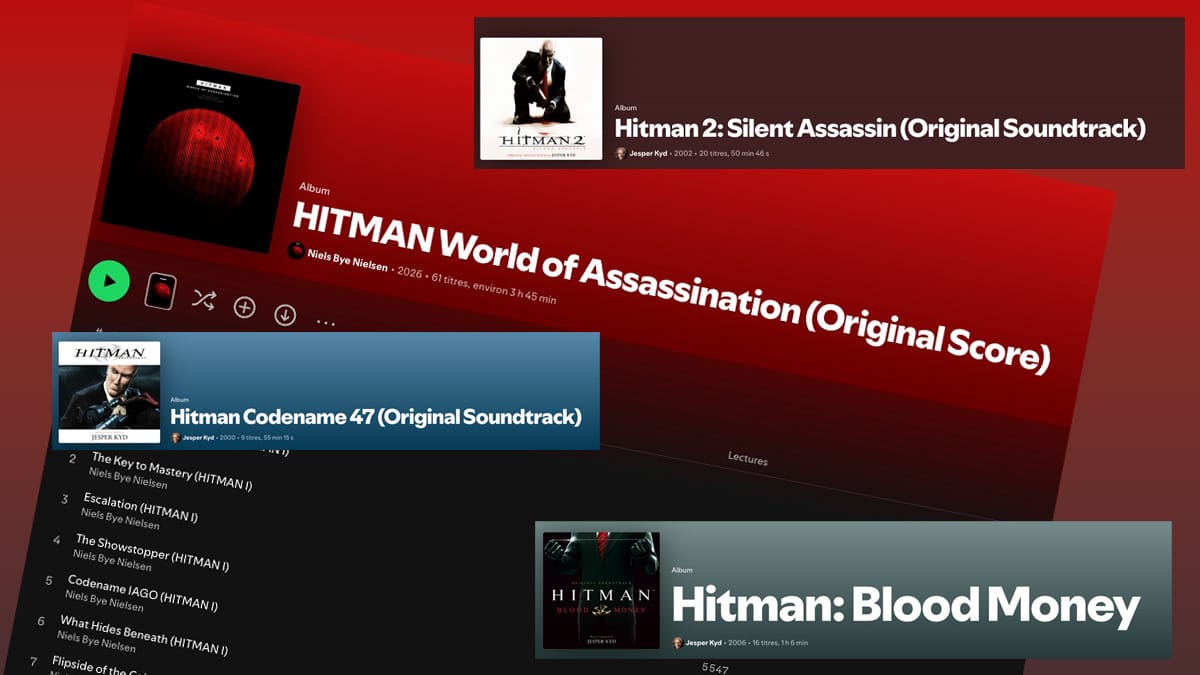
“For Zenless Zone Zero Original Soundtrack, miHoYo preferred this without parentheses. For HITMAN World of Assassination (Original Score), there was some excluded additional music by other composers, so this felt more reflective of the album's content (similarly, Assassin's Creed Shadows (Original Score) sets The Flight's work apart from other in-game music). For ARK Genesis: Part Two (Original Game Soundtrack), they had an animated show in the works at the time; similarly, Borderlands 4 (Original Game Soundtrack) helps reduce confusion with the movie soundtrack.”
It all comes back to a desire to separate background music from tracks meant for pivotal narrative moments. Take Assassin's Creed Shadows, where bands like TEKE::TEKE, Thunderdrum, and Tiggs Da Author composed exclusive songs. Shoving those under a "score" umbrella might have caused some serious confusion.
Guidelines? What guidelines?
Over at Kid Katana Records—a label known for its ruthless consistency in naming—I was told they simply follow Spotify's guidelines. “We play the good students and decided to follow platform guidelines, which recommend using 'Original Game Soundtrack',” says Tarafa Sahloul, co-founder of the French label. “Everyone does their own thing, but we chose the most common format.” Still, he admits these are just recommendations. “I think indie composers putting their music out there via TuneCore just go with their gut, swapping between 'original soundtrack', 'soundtrack', or even 'OST.”
On Apple Music, a detailed style guide seemingly gives us all the information we need. According to the article, a score is "The instrumental music on a soundtrack. A score can have one or more tracks on an album. Score is a subgenre of soundtracks but should be the Primary genre when appropriate." Conversely, a soundtrack is "A collection of audio recordings used in another media. It can be used in a motion picture, television show, stage performance, internet stream, or video game. It can also be music made to accompany a book or graphic novel. A soundtrack can be part instrumental score, part songs with vocals, and a musical."
After my article was published, composer Corentin Brasart (whom I recently interviewed about his great work on Deer & Boy) explained to me that if he didn't specify "Original Game Soundtrack" when uploading his music, his distributor (DistroKid, which is by far the most popular platform for indie composers) could reject his submission.
Personally, I prefer the simple 'Original Soundtrack,' but I have been forced to use 'Original Game Soundtrack' for a while to prevent the album from being rejected by the distributor.
— Corentin Brasart (@73touches.bsky.social) 7 juillet 2026 à 19:21
The rabbit hole goes deep, and I'm starting to realize that... I might be the only person who actually cares. Case in point: even a massive publisher with over 30 years of history doesn't always know which foot to stand on.
The Rule Is That There Are No Rules
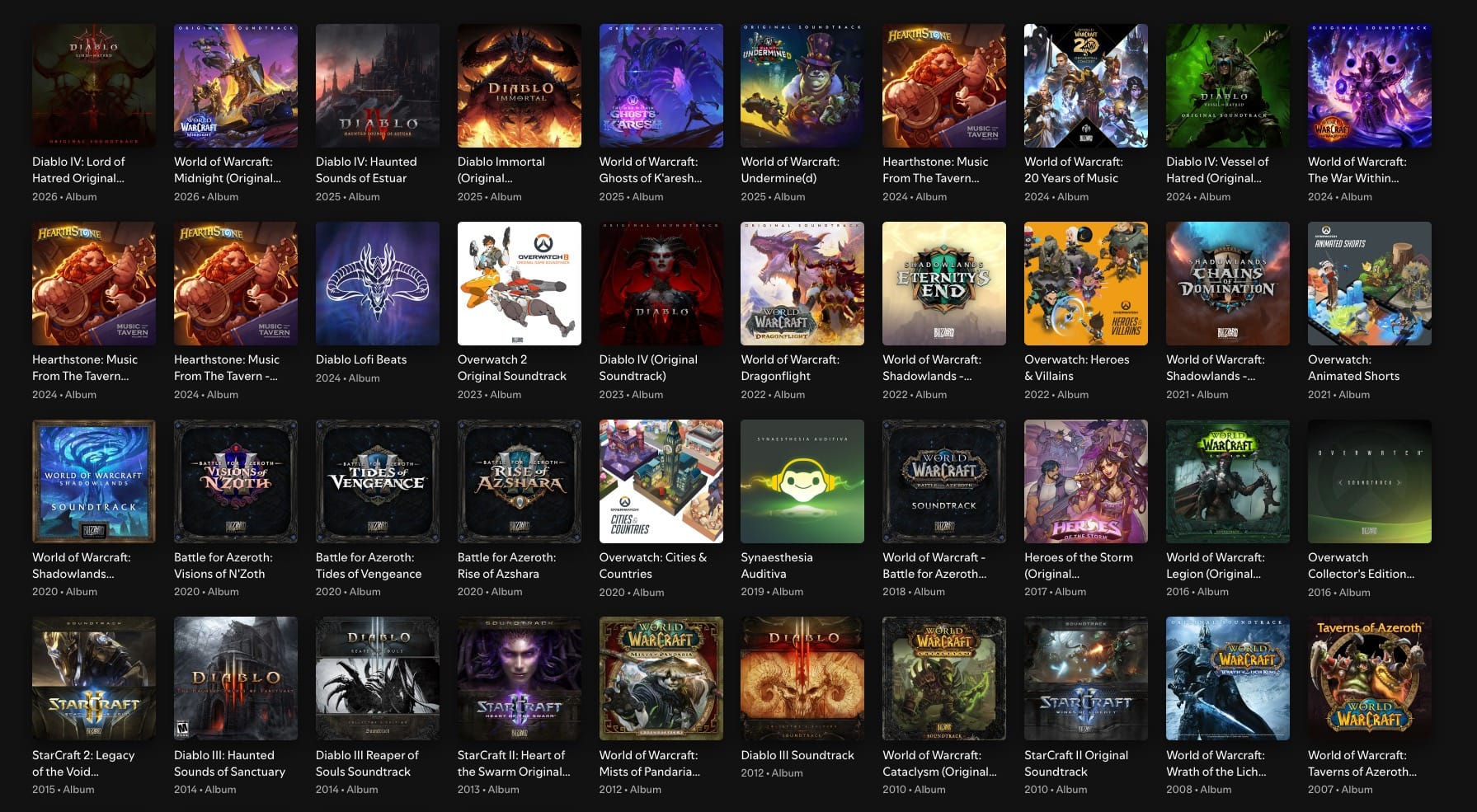
Charlotte Pyle is the Principal Music Producer at Blizzard Entertainment. She oversees music production for the studio behind World of Warcraft, Diablo, Overwatch, and all their spin-offs. Yet, looking through their catalog, no two releases follow the same naming scheme. “Obviously, having 30 years of music, there is some inconsistency with naming,” she admitted over DMs.
Diablo II is an "Original Soundtrack", but Diablo III is just a "Soundtrack". For Diablo IV, Blizzard seemingly agreed on "(Original Soundtrack)" with parentheses—except for the latest expansion, Diablo IV: Vessel of Hatred, which drops them again (though they are present on the Bandcamp version). World of Warcraft is even more chaotic: some albums are clearly labeled as "(Original Soundtrack)", while others have no tag at all, like the World of Warcraft: Dragonflight expansion. That one was just an oversight, Charlotte Pyle assured me, adding that she would try and update the album to fix it.
And what about Stephen Barton, who labeled his SMITE 2 release an "(Official Game Soundtrack)" but his work on Star Wars Jedi: Survivor an "(Original Video Game Soundtrack)"? Does making a composition "original" make it any less "official"? The same goes for Inon Zur. Why is his music for Fallout 4 an "(Original Game Soundtrack)" while Fallout 76 is an "(Original Game Score)"? I reached out to both composers, but they didn't get back to me in time for publication, leaving me alone with my stupid questions.
After doing this minor investigation, I have to face reality: while "Original Game Soundtrack" is definitely the reigning champ of VGM naming, you can pretty much play with the vocabulary however you want without upsetting anyone—except me.