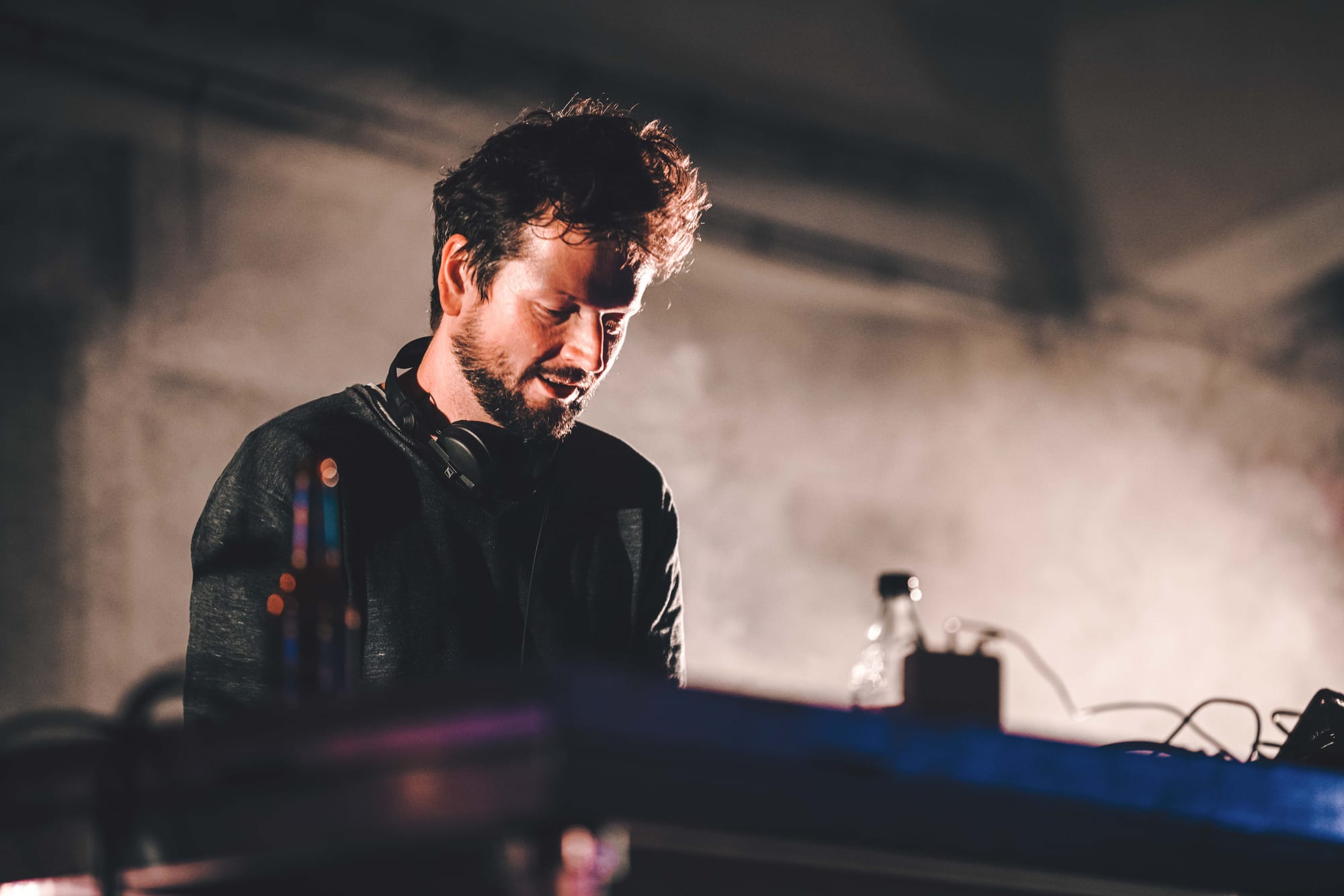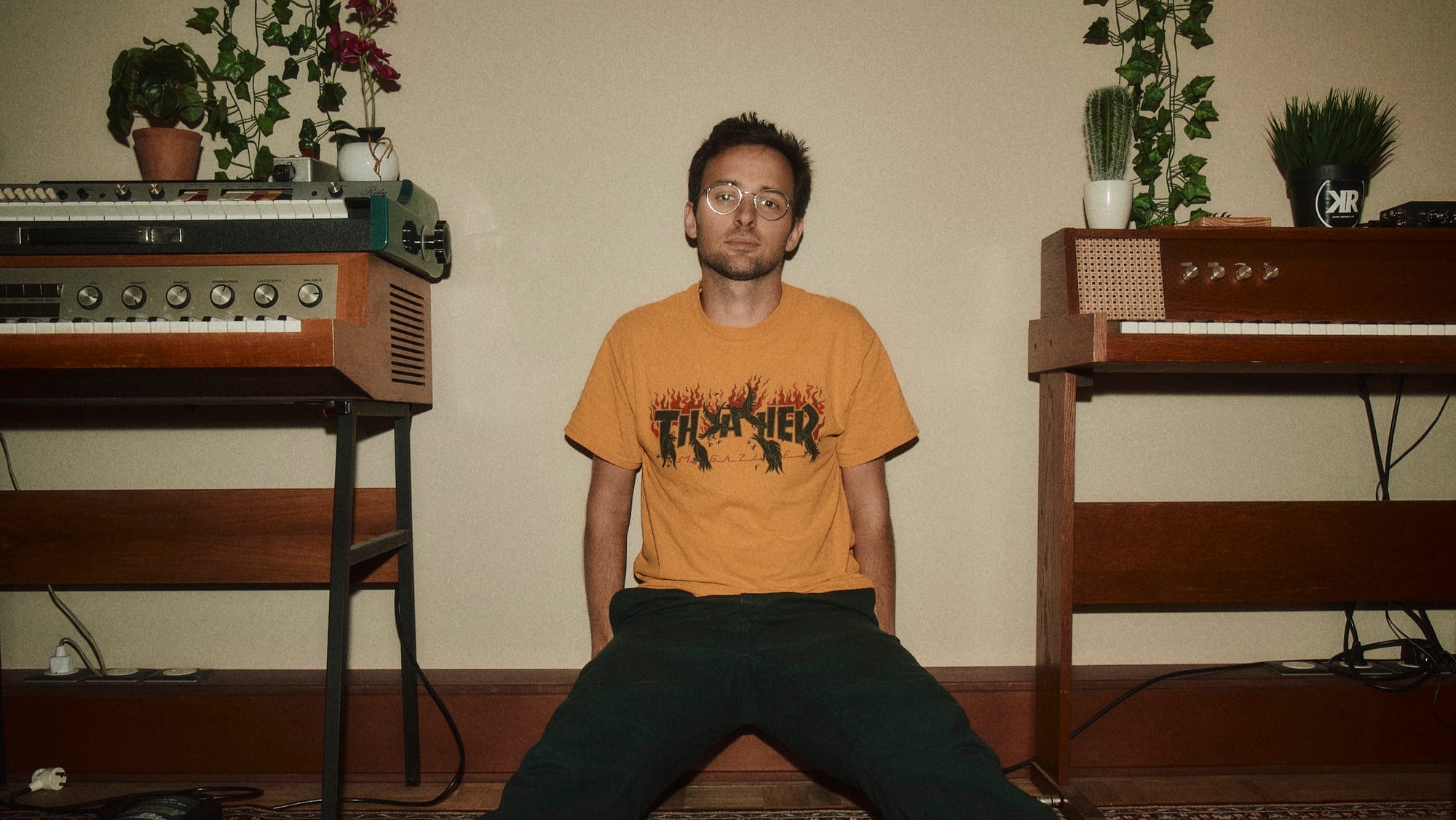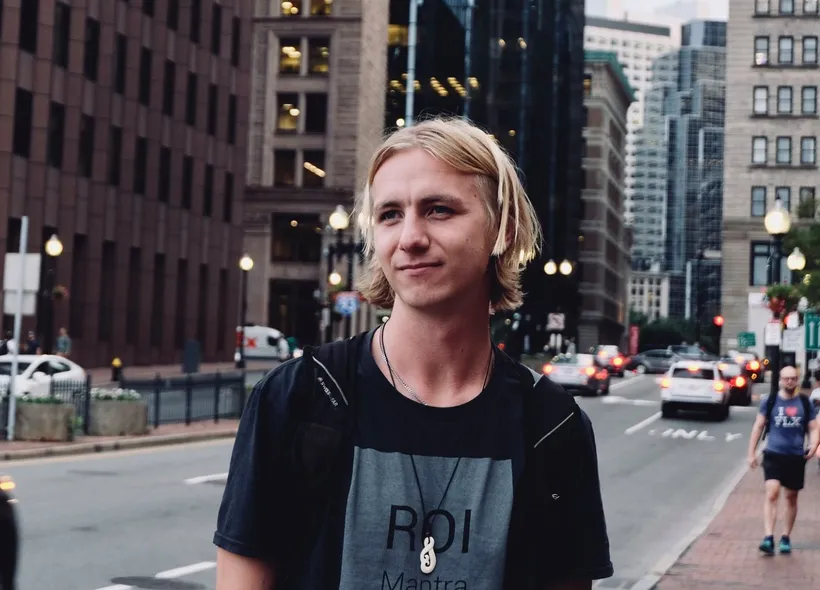
This month, I'm truly honored to have had the chance to interview Kyle Misko, the Ukrainian composer I mentioned a few weeks ago for his work on The Case of the Golden Idol. I'd also like to give him a huge round of applause: he has just been nominated alongside some major industry heavyweights at the first annual Game Music Awards, which will take place from October 19th to 21st. Best of luck to him!
You are a truly prolific composer. In addition to The Case of the Golden Idol and its DLC, I see that you have composed for another twenty games since 2020! That's incredible. How do you manage to stay inspired for so many different projects?
Kyle Misko: First of all, thank you so much for your kind words, for reaching out, and for noticing my work — it genuinely means a lot! For me, inspiration comes from living life with all its ups and downs. I strongly believe that our personal stories and backgrounds shape us over the years and make us who we are today, both as artists and as people.
My own example is that I come from a very grounded upbringing. Growing up in the small town of Ozerne in Ukraine in the late 90s and early 2000s, I was surrounded by this incredible wave of new music, games, films, and TV shows. The internet was just becoming a thing, and it felt like the world was opening up in real time. Both my mother and grandmother, who were very talented musicians and singers, taught me a great deal about the simple miracle of being alive — lessons that have stayed with me long after they passed.
At the same time, I was at times surrounded by a more conservative environment and the challenges that come with living in a post‑USSR country. That contrast really shaped me and continues to influence my work.
I try my best to enjoy what life has to offer and translate that into my compositions. Travelling and seeing new places is an integral part of my inspiration, as well as going outside of my comfort zone and constantly evolving both as a person and as an artist. I've also learned that staying inspired comes from challenging myself — and that only happens through consistent work.
2020 was the year I started working full‑time as a composer, but my journey began much earlier — with my first soundtrack works back in 2015, and many compositions written before that in 2013–2014 when I first started out. That long path toward my dream work is also a big part of what keeps me inspired.
What I love about your work is also your versatility. It seems like you're comfortable in any musical genre. Did you grow up listening to a lot of music from different genres?
KM: This is interesting to think about! For a long time I believed that my journey into the music world started with rock. I loved this genre so much that I picked up a guitar in 2008 at the age of 12 — not because someone in my family suggested it (my dad and grandfather were military, while my mom and grandmother were musicians) — but because I fell in love with Switchfoot, Godsmack, and the Prince of Persia: Warrior Within soundtrack. I really wanted to play those songs and learn to sing.
In the following years I explored a lot of rock music and even formed a couple of rock bands of my own (most notably my cover band Almost Americans — you can hear our very first performance here). It was The Offspring, Linkin Park, Godsmack, Tool, Green Day, Limp Bizkit, Radiohead, Blink‑182, Switchfoot, Nirvana, Foo Fighters, Coldplay, and many others all the way until around 2014–2015. Interestingly, it was thanks to some of those bands that I was introduced to electronic music — for example, I discovered Aphex Twin and Autechre thanks to Radiohead, which later led me into many other electronic genres.
In 2012–2013, while I was an exchange student at Hillsboro High School in Oregon, I was a jazz guitarist in the Hilhi band, which opened that world of music to me as well. You can actually see me playing guitar with the band here.
My interest in video game music started after a very influential mentor I had in 2013–2015 — a producer from the Tatamusic Production studio where I first began composing — helped me define my dream job.
But as I grew older, I realized that I had been impacted by music from my childhood far more than I thought. My mother sang in Zhytomyr’s Choir Capella “Oreya” from 1995 until 2007, with her own release with a couple of friends in 2007. Hearing this extremely beautiful, ethereal music affected me deeply. I always had it in the background as a kid and went to many of her concerts, but didn’t fully appreciate it until I grew older.
Secondly, we had many video games on our PC in the 2000s (mostly pirate copies my dad got from a friend or ones I bought from bootleg stores, haha). Playing games like Diablo, Warcraft, Legacy of Kain, Harry Potter, Myst, Heroes of Might & Magic, and many others with incredible soundtracks made a huge impact on my musical taste and, even though I didn't realize it back then, laid the foundation for the soundtracks I compose today.
Since the age of 6, I was enrolled by my parents in “Sonechko” — an Academic Folklore Dance Ensemble from Zhytomyr. I went there after regular school and graduated after 11 years of performing across Ukraine and Europe with various national folk dances from Ukraine, Moldova, Bulgaria, Russia, Greece, Hungary, and many others. Our practice classes always featured live classical music played on piano, and that’s where I grew up listening to a lot of classical and folk music. You can see me performing with the ensemble here.
While a student at a music school in Zhytomyr, I also learned to play a lot of classical compositions on the guitar, which shaped my taste too. And then there was my grandma, who was a teacher at a music school in Ovruch, playing accordion and piano — that subconsciously introduced me to other genres as well. As did my father, who had a lot of CDs (with The Cranberries and The Offspring being his favourites) that he would put on when coming home from work (he was a jet pilot at the Ozerne Air Base at the time).
So even though as a kid I was personally drawn almost entirely to rock bands and rock music, I was surrounded by all this other music that subconsciously left a huge impact on me — even if I wasn't purposefully listening to it or appreciating it the way I do today.
I don't think I'm mistaken in saying that your work on The Case of the Golden Idol is probably the one that has given you the most exposure. How did you end up on the project?
KM: True! There was one more project earlier that gave me a lot of exposure — Legacy of Kain OST Re‑visited, where I recomposed music from that series — but other than that, The Case of the Golden Idol is certainly my first real “breakthrough.”
I had a dream of making music for games since around 2013, when I was 17, but I didn't know how the industry worked, nor did I have any connections. All I knew was that it was my dream job because it combined so many things I loved. So while studying at university and later working full‑time jobs, I kept thinking about how I could land a project where I could write music for games. From 2015 to 2019 it was a lot of trial and error, and returning to Ukraine from New York in 2019 gave me the opportunity to try working as a composer full‑time. I signed up for numerous game developer networks, Discord servers, Facebook groups, and so on, and every time I saw a cool project, I reached out and started talking about the music.
In 2021, one of those cool‑looking projects was The Case of the Golden Idol. I reached out to Andrejs (the lead developer), and they said that music was way down the line in production, but we agreed to get back in touch once the timing was right. Over half a year later, in 2022, they reached out saying that auditions for composers were open. I got very hyped up and made a demo track based on the first scenario of the game (where Albert Cloudsley pushes Oberon Geller off the cliff, for those who played the game :D). And while they liked the sound, they didn't quite see it as a fit for the game.
I initially imagined the soundtrack as “new age ambient tracks” with a hint of the 18th century; meanwhile, they envisioned it exactly the other way around. I improved the first demo, but we were still not on the same page with the atmosphere, and they emailed me later saying that unfortunately they decided not to proceed with me as the composer.
I was really disappointed that I didn't get it right, because I was absolutely convinced I could nail the music for this game. Latvians grew up playing pretty much the same video games we did in Ukraine in the 2000s, so I had this nagging feeling that I could make it work. It was in Lviv, at the beginning of 2022, when I composed my third demo — which ultimately became the main theme for the Golden Idol series, The Watchful Eye. Upon hearing it, they absolutely loved it, and the rest is history.
Interesting fact: the title track sounds almost exactly like the demo I submitted back in 2022, so every time you hear that track, you’re experiencing the exact moment they decided to work with me.
As I mentioned earlier, you're a Ukrainian composer. You've also told me in a previous email exchange about the terrifying conditions in which you composed certain tracks. Have you changed your way of working since the war broke out? Do these events infuse into your music?
KM: Ah yes… It was around the third track of the soundtrack (the “Alone & Dead” track — how ironic) when the war started, and Andrejs reached out almost immediately, saying there was no problem postponing the music because of the situation.
But I insisted that focusing on music instead of the war and political events was exactly what I needed at the time. So I continued writing the rest of the soundtrack in between countless air‑raid alerts — going down to the bomb shelter near our apartment, then coming back up to keep composing.
I should mention that I was living in Lviv, a beautiful city close to the Polish border, so it wasn't nearly as terrifying as what people in the East or the rest of the country were experiencing. Most of it was psychological pressure — and a few occasional missiles hitting targets around the city — but never in the centre where my girlfriend Fernanda (now my wife!) and I lived.
I wouldn't say my way of working changed, apart from having completely messed‑up working hours throughout 2022. What changed was my whole perception of life — the realization of how precious it is and how easy it is to lose it. Experiences like that shift your perspective, and naturally that ends up reflected in the music. So yes, these events heavily impacted my personality, and naturally, they impacted my music as well.
The whole situation made me more humble than ever. I found myself appreciating the most basic things — like simply having stable electricity in the apartment — and at the same time, my music gained a darker edge. It matured compared to my older work, and once again the “good” and the “bad” in life both helped shape the new tracks.
It also inspired one of the most ambitious projects I've ever worked on: the Ukrainian Alternative Folk Album, where I resampled older Ukrainian folk music, added my own flavour to it, and released it as an album. My wife was a huge part of this: she helped gather the footage and crafted much of the montage you see in the videos. We were also able to gather donations for a Ukrainian voluntary organisation founded by my father in 2014.
I like to end these interviews by asking which video game music composers inspire you on a daily basis. Who are your (Golden) idols?
KM: Haha, sure! I mentioned earlier that I grew up playing Blizzard games, and a couple of composers from that studio still influence me greatly to this day. Most notably Derek Duke, who composed the Night Elf and Undead themes for Warcraft III, as well as the music for Azuremyst Isle in World of Warcraft. He has a fascinating background — living in India for some time and studying music there had a huge impact on his musical style.
Matt Uelmen, who composed the scores for Diablo 1 & 2, and later created incredible music for Torchlight and WoW: Burning Crusade, has had a significant influence on me too — especially as a fellow guitar player.
Another Golden Idol for me is Jesper Kyd and his work on the first Assassin’s Creed game — to this day one of the most atmospheric and cinematic soundtracks I've ever heard in a video game. I absolutely loved his later work on the series too, but that first score has a special place in my heart. He’s also a sound designer, which I deeply admire, and the “Master Assassin” track from Assassin's Creed Brotherhood is, in my opinion, the perfect example of that blend of sound design and composition.
Kurt Harland, who most notably composed for the Legacy of Kain series, is definitely a huge inspiration of mine as well. A lot of the darker soundtracks I produce are heavily influenced by his work, and I think my Legacy of Kain OST Re‑visited project — where I recomposed entire scores from the series — says it all in terms of my passion for that soundtrack and series.
I should also most definitely mention Stuart Chatwood, composer for the Prince of Persia series. We actually had a chance to chat with him about one of my favourite soundtracks of all time, Prince of Persia: Warrior Within, which partially inspired me to start playing the guitar — and those were some of the first tracks I ever learned, with “Escape the Dahaka” being the very first one.
My most recent inspiration is definitely Frank Klepacki. I recently went to see the Command & Conquer soundtrack performed live by him and The Tiberian Sons, and aside from the amazing concert, we also had some very profound conversations about life and the gaming industry as a whole. He and the whole crew are a big inspiration in my life right now. Frank even gave me a shout‑out during their concert in Brno, Czech Republic.
My other inspirations are Alexander Brandon (Deus Ex series), Robyn Miller (Myst series), Kai Rosenkranz (Gothic series), Paul Romero (Heroes of Might & Magic), Akira Yamaoka (Silent Hill), and Takeshi Furukawa (The Last Guardian). They all influence my sound in different ways, and discovering their stories has been another important source of inspiration for me :).