Interview originally published on November 26, 2023.
I already mentioned it in my previous selection: Alan Wake II is my Game of the Year. Partly because I share a long history with Remedy, but also because the Finnish studio always manages to find all my emotional triggers and pull them all at once.
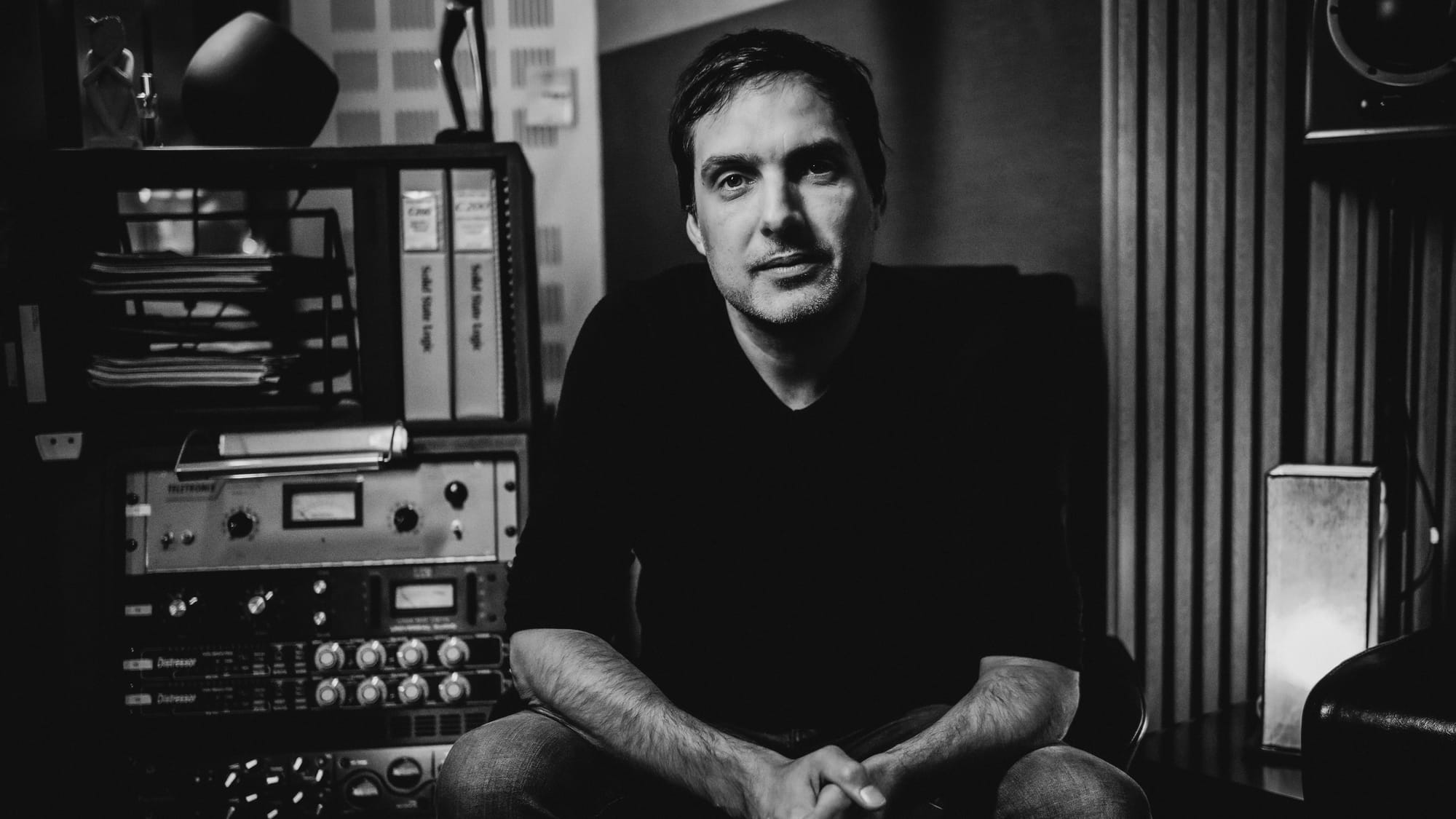
It is a craft akin to sorcery, with Petri Alanko standing as the archmage. Having joined Remedy in 2004, Alan Wake was the very first project he ever worked on for the studio. Safe to say, reuniting with the troubled writer 13 years later must have been quite something for him as well.
(A quick heads-up: in a few answers, Petri Alanko may hint at some character appearances in Alan Wake II. If you want to keep the surprises entirely intact, be sure to come back to this interview once you've finished the game!)
Before we begin: huge congratulations on your nomination at The Game Awards! Alan Wake II is running in several categories, including Game of the Year and Best Score and Music. Would you like to comment on the announcement?
Petri Alanko: I only recently learned about the Game Awards nominations, and they literally fell from a clear blue sky. I guess nobody at Remedy was anticipating anything — and myself even less so — as Alan Wake II was released just a few weeks before the nominations were announced. It’s definitely a great honor to be there, and the other nominees are really, really good. Whoever gets the award has done a marvelous job.
I have to make one remark, though: even though my name is listed for the soundtrack nomination, I have to strongly emphasize that everything is a result of teamwork at its best. And that, by the way, comes straight from my heart: the audio team really is full of magnificent people, and I value their expertise highly. If something sounds good as an idea or a concept, they will make it sound much, much better. A “thanks to” list would be a meter-long, printed in a 9-point Courier font... 😄
Alan Wake was the first game you composed for after joining Remedy in 2004. How was it to reunite with these characters and this particular universe? I saw on LinkedIn that you began workshopping music for the sequel as early as 2012. There must have been many drafts discarded and various avenues explored. I’m eager to hear about the creative journey in your studio over the last decade.
PA: Actually, I recently went through my hard drives and noticed the very first pieces written for a potential AW sequel were composed as early as Nov 2011. It was very clear already by then that the choices Alan made in the first game would affect the overall tone and instrumentation of the music, and surprisingly, not much has changed thematically. However, the instrumentation did change a lot.
It was clear that AW1 was supposed to be sort of an intro or an overture; whatever came next would be the first steps “in the other realm”, the Dark Place. That change was obvious right from the start. Since the plotline and the characters evolved about a dozen or so times (even before this latest AW2 script), I made a few choices very early on, and kept waiting until That Story appeared and AW2 got greenlit.
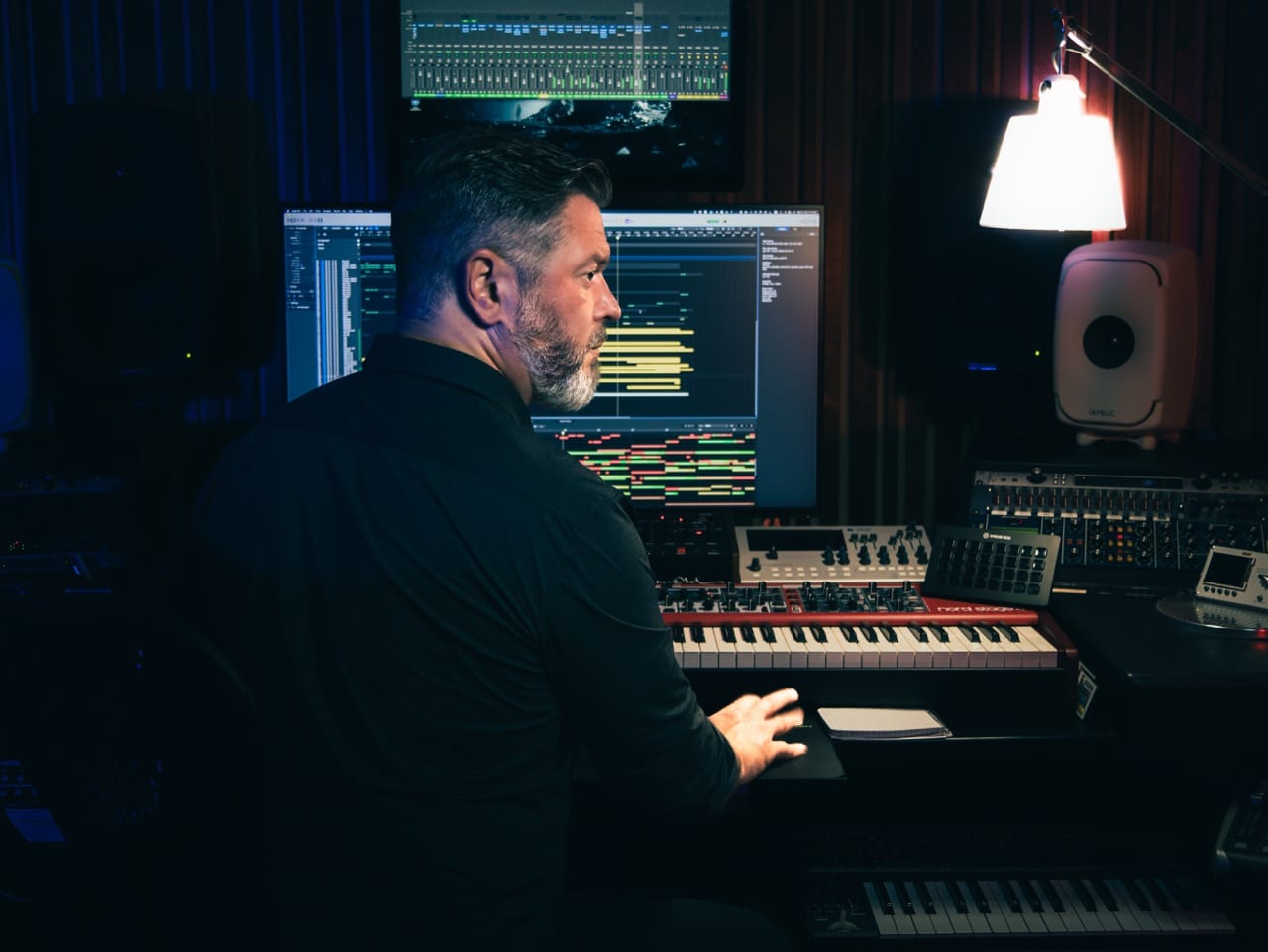
With AW1, the majority of the orchestration relied on a string section, with an occasional woodwind appearing here or there, and that worked really well for the first game. We changed something with AW: American Nightmare (as well as the DLC packages for AW1), but it was still clearly closely related to the original one. Now, with AW2, as Alan had been a prisoner of the Dark Place for 13 years, a lot of things had changed. Not only the surroundings, but his mind had also taken a few hits due to constant escape attempts — each ending rather painfully. Even though his conscious mind was wiped, something in his brain remembers... and this got me interested: how would something like that affect someone’s thinking or psyche?
It was clear the Dark Place is definitely not the kindest environment; it’s rather cold, dark (well, naturally), ominous, threatening, overpowered, enslaving even enslaving—and for those attributes, we needed quite a few sonic equivalents.
In Quantum Break, you got to explore a more electronic vibe, and I think it’s safe to say that Control was your darkest album yet. How would you define the music you composed for Alan Wake II?
PA: Well, it’s definitely not your average My Little Pony, to be honest... I personally hate to redo something all over again and repeat the same tricks, and people who know me know how much I try to find a new angle for every project. I know there is a sense of continuity that needs to be cherished, even with the most violent orchestral changes — some would even call that fan service — but I feel we would let the fans down if we did the same thing all over again. I must emphasize that I wouldn’t fix something if it wasn’t broken, and if one listens to the last minutes of the end credits, they’ll find out what I mean.
AW2 has its roots in the same vein as AW1, but since a lot of time has passed—and we even have a second protagonist thrown into the game—a lot of things changed. The Dark Place and its evil forces are stronger and cleverer than ever, and the danger is omnipresent. Even so, in the middle of the darkest tones, there are a few positive rays of sun slashing through the madness, giving hope. But the way I’m treating instrumentation probably shows that one has to rely on their intuition; it’s crucial for survival. There are no divine surprise saves or mercy; to conquer the Dark Place and its influence, one must find the strength from within.
In general, I would say the bent metallic tones are something that work their way into the players' minds. It’s subliminal at times, sometimes quite a lot more than subliminal, but the idea behind it all is actually rather metaphorical: something is so evil that even the hardest materials start giving in. A lot of “normal” instrumentation is processed by different algorithms that mangle the tones “through metal”. A more technical explanation would put people to sleep in a second, but let’s just say there’s a lot going on, from convolutions to wrapping, tone transfer, and a few clever Kyma algorithms as well.
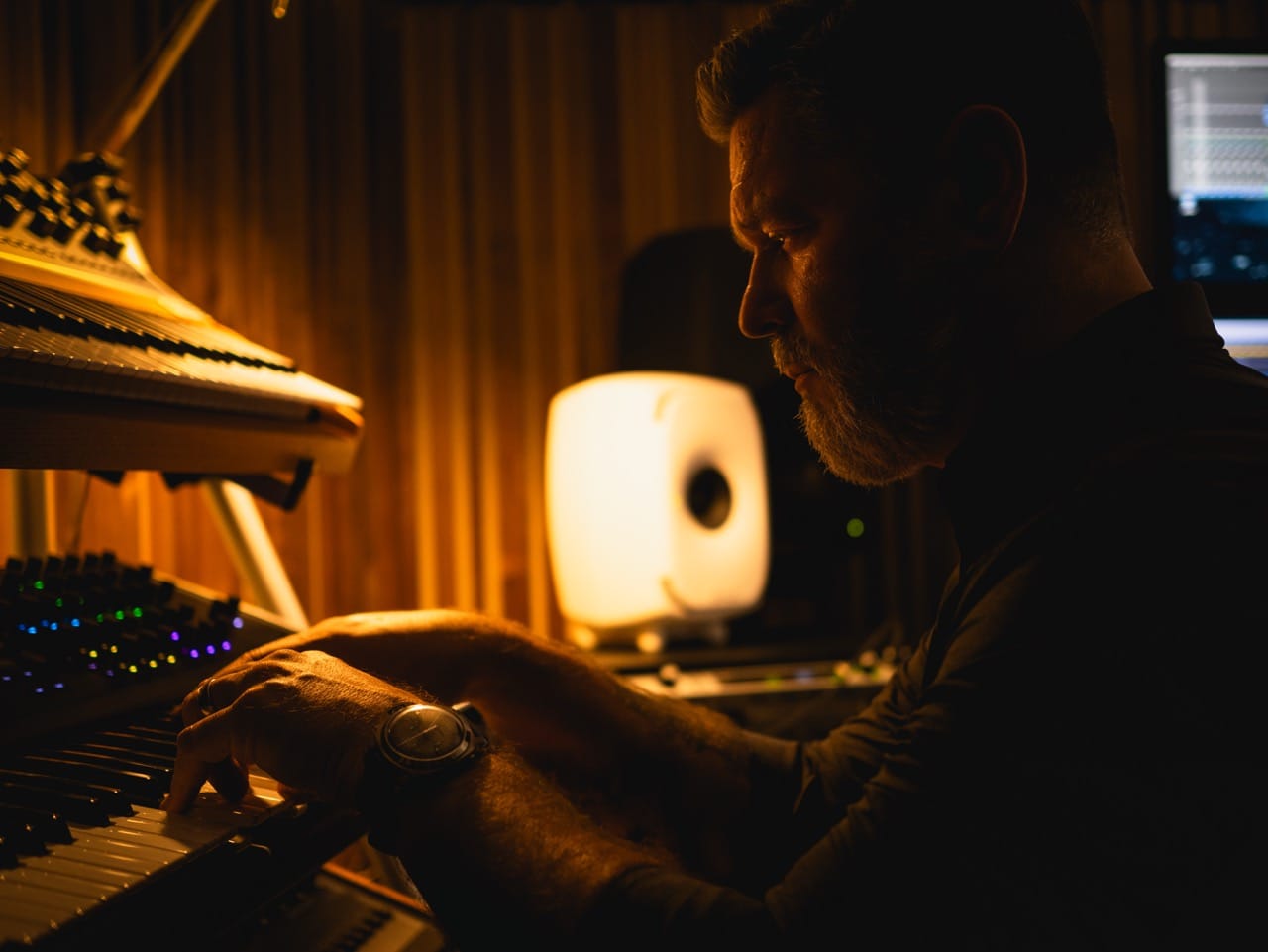
You are a minimalist composer—a man of few tracks, to put it differently. Even though Remedy’s games can run for 20 hours, your albums usually feature only around 15 tracks (I don’t know yet how many tracks will be on AW2’s score). Is this due to your personal workflow, technical constraints, or because the games don’t require that many standalone tracks?
PA: Oh, some of the music is just boring in my opinion, or rather, mere sounds instead of compositions. In AW1 there were 243 minutes of music composed for it; here I clocked 434 minutes, but I definitely have no idea whatsoever where that is. I prefer to keep the soundtrack albums listenable instead of them being collections of sound design lacking movement or melodies. It’s a deliberate choice, in other words. Sometimes there’s a memorable harmony and a melodic cue that lasts for 15–20 seconds, but there’s a hellish nightmare sound design lasting for 3 minutes before it and another 4 minutes after it, so… yeah, I prefer to leave things like that out, unless they represent “signature” moments.
I calculated the best of the AW2 soundtrack a short while ago, and there’s 103 minutes of very good material—“good” as in “this could be listened to as a standalone piece”. A good soundtrack works without the main product, and I think it makes more sense for the Remedy fans, too. Also, personally, I’m not a big fan of soundtracks where a bassline goes “do do do do” for five minutes with dissonant drones embellishing the soundscape. In the game that makes complete sense, but again, that requires the picture and the events on-screen to work.
Alan Wake II shakes things up compared to the first game: it’s much scarier and leans heavily into survival horror. How did that shift in tone inspire you?
PA: To be honest, I was a little worried about the horror angle, as it usually is very ruthless and unforgiving. Even the slightest change of tone could render a scene comical or mismatched—meaning that the music and on-screen events aren’t paired in the most feasible way. It’s a very thin line we’re walking there, and psychological horror always works best. In that, total silence is sometimes needed; the key to maximum impact lies within the dynamics of the scene, the dynamics of the audio/music, as well as the visible events. It would be very easy to give away all the clues beforehand, which makes the horror genre even more delicate than, say, romantic comedies. Okay, maybe that was a bad example…
Then again, one needs to remember it’s not just a full-force attack that makes it the most effective; the slaps work better if there are caresses in between. Supporting the emotional dynamics is crucial.
That’s a first: Alan Wake II allows us to play as two different characters (well, three, if we count the intro). Alan’s story gives us the chance to experience the Dark Place, where reality and fiction blend. Was it exciting for you to delve deeper into Alan’s psyche and further explore the darkness that surrounds him?
PA: Oh YES! It actually was my hope already with AW1, but we were able to visit that only briefly. With AW2, it was everything I imagined and even more. The cold, ruthless cityscape is a perfect allegory for the Dark Place: we all know how emotionally cold and punishing gigantic megacities can be; just think about walking in NYC—how many people do you see smiling?
Heh, I have a story about smiling in NY, by the way. This happened before COVID, so it was still “a normal world”. Some years ago I was in NY and just happened to feel good after a walk in the park, heading towards shopping heaven and hell with an ice cream cone in hand. Good day, good weather, interesting events ahead, cityscape all around—so I smiled. After about one block, someone walked straight up to me and asked a rather interesting question: “You okay? What're you on? Honey, trust me, it’s not worth it…”
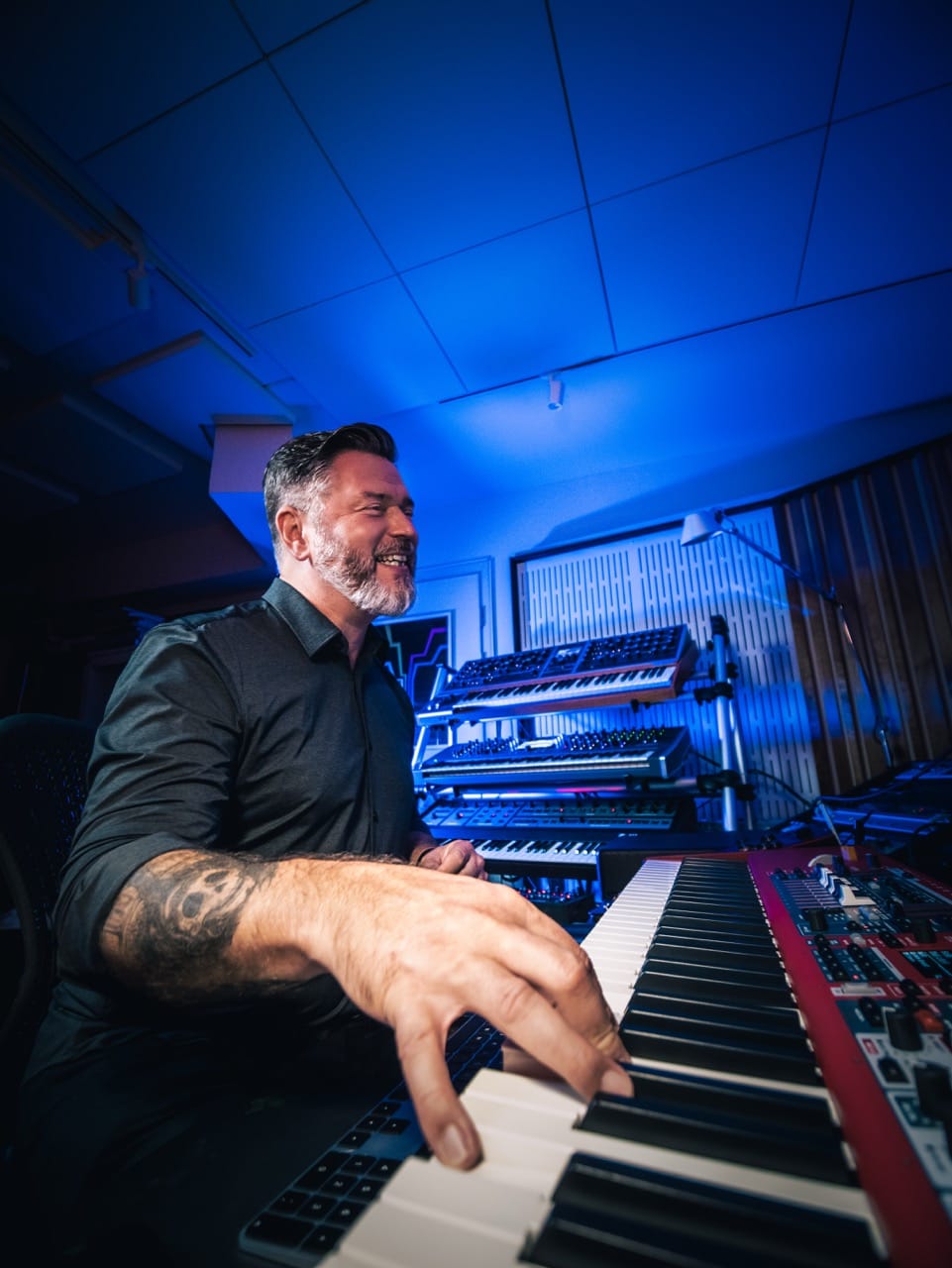
But in all seriousness, taking into account the events prior to AW2, Alan has had it really bad in the Dark Place, and what he has to face there is well beyond anyone’s experience. He’s very meticulous and tries to hack his way through all the madness while trying to maintain his sanity. There’s a LOT to write to; he literally is a composer's dream. Every composer wants a character like Alan to write for. There’s so much one can do, just pouring in the guilt he bore during AW1’s events, the urban couple life before that, not having seen his wife for 13 years, and so on. At times Alan is a Don Quixote against all the windmills, yet somehow he manages to find his way through.
About that: how did you musically differentiate Saga’s segments from Alan’s in the game?
PA: Saga practically takes on the role of Alan now. I mean, what she has to face is pretty much identical to Alan’s experiences in AW1: Alan had Alice, Saga has her child, and the twisted, unwanted events affect her life in a very similar way to Alan’s when he and Alice decided to take some time off and go on vacation to Bright Falls. Saga’s world is rather normal as she and Casey approach Bright Falls during a work trip, only to find out rather soon that nothing is what it seems. The Dark Place starts “leaking” into the “normal” world, in other words, and that can also be heard in the score.
At some point, the two sonic entities amalgamate—entwine, actually—only to slightly separate a little later. But the roles have shifted somewhat: Alan’s reality touches briefly upon our reality when he drives back to Bright Falls, which is when his instrumentation is briefly “normal”, only to return to the sheer hell of Casey-infested Bright Falls through the static wall of the Dark Presence.
Finnish culture and Norse mythology have always been integral to Remedy’s games, but they’re even more prominent in Alan Wake II. It feels like you’ve gone the extra mile this time with stronger references. How did you incorporate these new narrative elements into your music?
PA: Some of the sadder tones of Alan’s mayhem are accompanied by large valveless brass horns—a little like “foghorns”, brass instruments relying on the natural harmonic series of overtones, not unlike the ones Vikings could’ve used. Some of the other instrumentation choices reflect the Scandinavian heritage, too: there’s an occasional Hardanger fiddle (okay, heavily processed, but still), a nyckelharpa, and a kantele. I even made a few convolution reverbs from recordings I made in my own sauna; throwing water on the hot stones produces a meaty SSHHHHH, and inserting that into a convolution processor makes a wicked, blooming reverb. I strongly recommend that, by the way…
Plus the fact that with Control we embraced the tango genre with “Sankarin tango” (tango hit Finland really hard back in the 1950s), and here the 1960s twang guitar combo genre with "Yötön yö", a track Ahti sings in karaoke—as well as in the short film. There’s Finnish quirkiness lurking all over the place. For foreigners it may be subliminal, but us Finns… we recognize it. There’s a lot to pour into it, but we didn’t want to make AW2 a big inside joke or a pastiche. Instead, it had to be balanced and delivered tastefully, thanks to Sam’s (Lake) and Clay’s (Murphy) brilliant story.
I was rather surprised at how often a 37-string kantele offered something interesting for some of the scenes. It usually provided some texture, but sometimes I went full idiot and played it with a 2-euro coin and fed the signal through a Boss Metal Zone straight into a valve rectifying preamp, etc. It’s a surprisingly flexible instrument, a Finnish classic, which I bought for 50 euros from a recycling center. As is, its sound is rather boring, a bit like a lame and mellow zither, but with severe processing, it’s a very different beast.
Beyond your composing work, could you tell us a bit about your work as an audio director? You must have a lot on your plate.
PA: Er, not for Remedy, but for the Finnish Broadcasting Company. And yes, there’s a lot on my plate, both in the areas of sonic identity planning, composing for games, touring with a band, songwriting for other artists, and so on… With the FBC (or Yleisradio, in Finnish), I’ve been involved with their brand renewal and the new sonic identity of pretty much all their major programs—but only as a director, not as a maker/composer/creator. I like to spend my time with audio and music, and there’s so much to do.
I took that role back in the day because I felt it would offer a big enough challenge. I like to think challenges are what make us better, both as humans and specialists in certain areas. The brand renewal will soon roll out, and to be honest, I’d love to find another challenge of about the same size—but there are so few companies in Europe of that magnitude. Let’s see.
(Note: Richard Lapington is currently Remedy’s Audio Director, and my role has been more or less acting as a Music Director creating music concepts, though we don’t use that title officially).
I love what you did with the ‘Chapter Songs’ in Alan Wake II. If I understood correctly, all the contributing artists are Finnish. How did you manage to involve them, and did they adapt easily to the universe of Alan Wake?
PA: The Chapter Songs were conceived from Sam Lake’s poems, which local songwriters turned into pop songs. I had nothing else to do with those, except I think it was me who pointed Remedy toward the songwriting company… 😄 I did, however, listen to each track very carefully, because the transition from a cinematic to a chapter track needed to be seamless.
I’ve been itching to ask you this one for a while now: how is it to work with rock stars? I love the Old Gods of Asgard / Poets of the Fall from the bottom of my heart. Can you tell me more about the nature of your collaboration and how you work together on Remedy’s game soundtracks?
PA: They pretty much work independently, according to the direction they receive from Sam (Lake) or Remedy’s audio team members: “Hey, we might need a longer guitar solo here…” And to be honest, a true collaboration between them and me still hasn’t happened.
Of course, as this is Finland, a small country with very few people and even fewer musicians, everyone knows everybody. You could say we’re good acquaintances and have had a few nice chats (I spent a good few hours at their office about a year or so ago, just laughing and checking out gear), but so far… yep, we’re good this way. What a Finnish way to say it, really.
This might sound a bit silly, but playing Coffee World in the game taught me about the significance of coffee in Finnish culture. Out of curiosity, how many liters of coffee did you consume while working on the Alan Wake II soundtrack?
PA: It’s not silly at all! At some point, I realized I had exceeded any sane amount of coffee when I enjoyed my eighth double espresso and it was only 2 PM. I can go without coffee for days without any withdrawal, headaches, or whatnot, and at other times rely almost totally on it, but that’s just me. Maybe there’s something odd in my genes? In short, I’m probably seen more often with a coffee mug in my hand than a mouse… and definitely no decaf crap, thanks.
On top of that, I sleep really, really well, so all the bullshit about coffee having strange effects on one’s sleep… well, at least for me, it’s all good.
To conclude, I’d like to ask you about your inspiration—for Alan Wake’s music, of course, but also in general. What kind of music do you like? What does Petri Alanko sing in the shower these days? Please tell me you're a Swiftie.
PA: I think it was Frank Sinatra yesterday, but to be honest, I’ve also sung Dua Lipa as well as Taylor Swift... I could replace Dave Gahan in Depeche Mode any day (not his looks or sound, but I know all their stuff by heart—and I could replace their keyboard players, too), and Ultravox has also given me a lot of good stuff. But… let’s just say it’s varied and I don’t want to punish innocent people by singing. Nobody’s been that bad. And I wish I had composed The Weeknd’s “Blinding Lights”. That’s an awesome track!
If I’m driving — which, thanks to touring, happens quite often—I like to listen to soundtracks. Not game scores, but movies. Just yesterday I zoned out for a few hours and listened to Fincher’s The Killer soundtrack. Before that, it was Sakamoto’s stuff, before that some Archive 81, and so on. As I’ve started to hate airplanes, hangars, and waiting, I like to travel inside my head, and music takes me places.

Support independent VGM journalism
NOWPLAYING is a publication dedicated to video game music news and the people who make it. If you enjoy my work, consider making a donation — it makes a real difference.