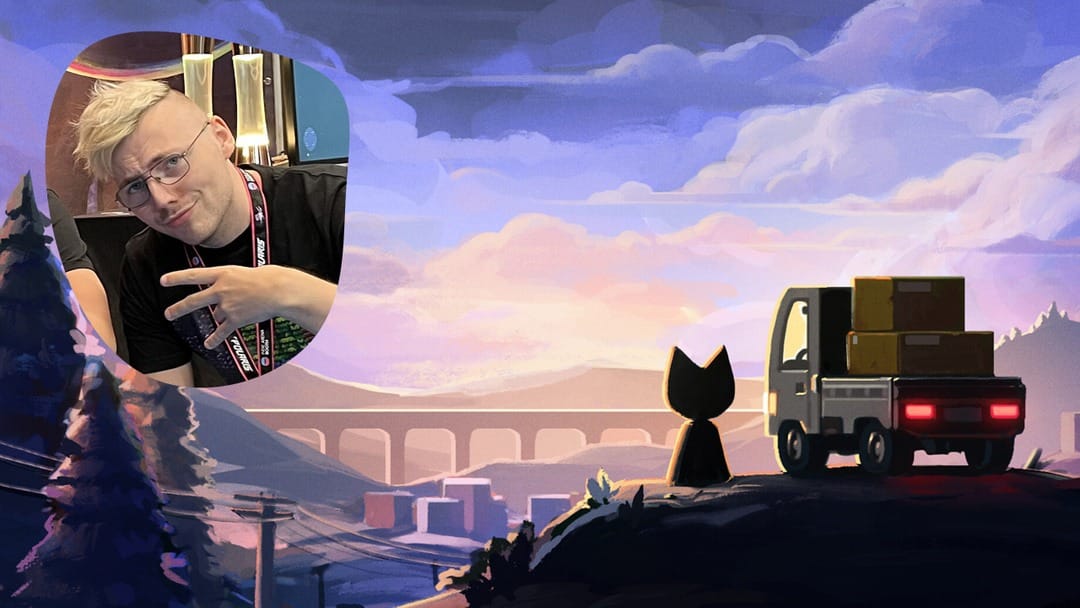
I’ve always been a huge fan of Todd Baker’s work—I still occasionally spin the incredible Tren soundtrack. Naturally, I expected him to be the one at the helm of the Monument Valley 3 score when it released in July. However, he wasn’t flying solo: Scottish composer Lucie Treacher co-composed the music for this latest installment of the dreamlike puzzle game.
Who? Exactly. A new name in the world of VGM, whom I reached out to immediately after listening to the album to learn more about her journey!
I just discovered your work through the Monument Valley 3 soundtrack! Could you start by telling me a bit about yourself?
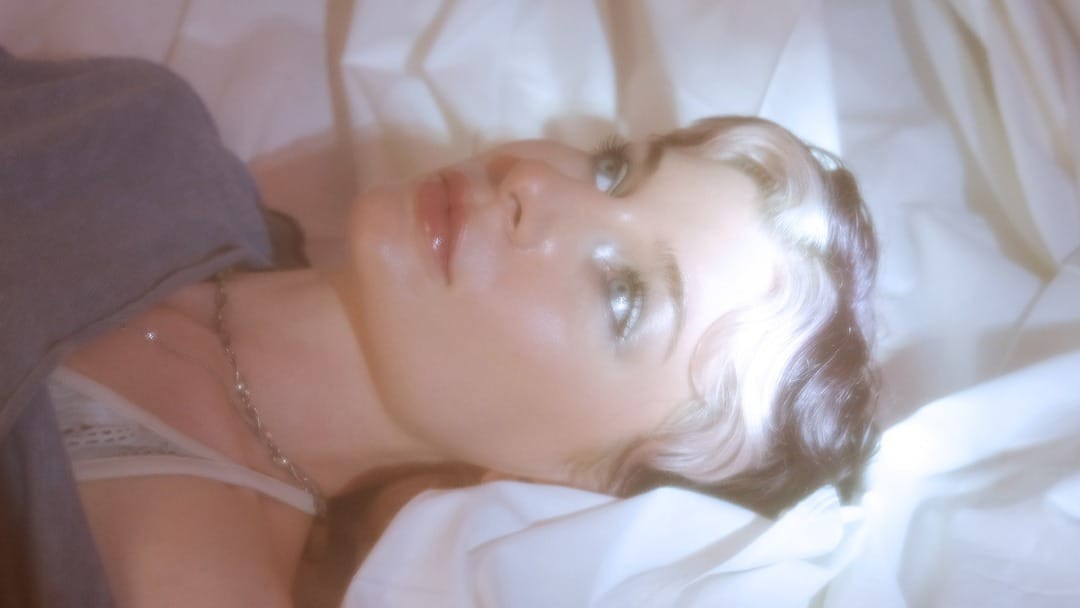
Lucie Treacher : Well hello! I’m Lucie, I’m a composer, sound designer, and prolific tea-drinker(!) from the North of Scotland. I have a background in classical music, songwriting and ethnomusicology. My MA is in Music for Film and Video Games from Berklee. My projects more recently lean towards the animation and video game fields; I’m currently doing 3 x 52-episode kids' animation series for BBC and Milkshake. I studied Indonesian Gamelan at university and love weaving these influences into my music and also working with instrumentalists from around the world. I’m also very interested in doing projects that have a socially impactful element to them, whether that’s working with a community or highlighting a poignant cause. So my background is a bit eclectic!
It’s the first time I’ve seen your name on a video game soundtrack. Was it a first for you too?
LT : Yes indeed it was—a baptism of fire! I sort of fell into video games a bit. I was doing music for theatre gigs before my masters, particularly immersive theatre, and I became very interested in how different musical tracks could be designed for different outcomes and routes—in essence, how narrative could shape and be shaped by the music. This sort of fluid approach to musical storytelling led me to start thinking about video game music. I’ve always loved getting my teeth into tech and production, and after studying the different software/middleware (Wwise, Fmod, and Unity), I felt ready to take on video game projects! Plus I feel like there’s so much space in video game music for music to shine, and often a nice opportunity to write some juicy tunes!
What’s your relationship with video games in general? Are you a longtime player, or was this a bit of a new world for you?
LT : Again, perhaps slightly unconventional! I wouldn’t call myself an avid player at all but I’m an extremely playful person! It is a bit of a new world for me, but I’m really excited by the teams I’ve met and worked with so far and impressed by the creativity and imagination that goes into everything. The idea of creating a new immersive world from scratch I find incredibly inspiring and creative. So on creative terms, it feels like this is one of the most vibrant spheres at the moment.
How did you end up working on Monument Valley 3? Todd Baker was the sole composer on the previous game – who reached out to bring you on board for this one?
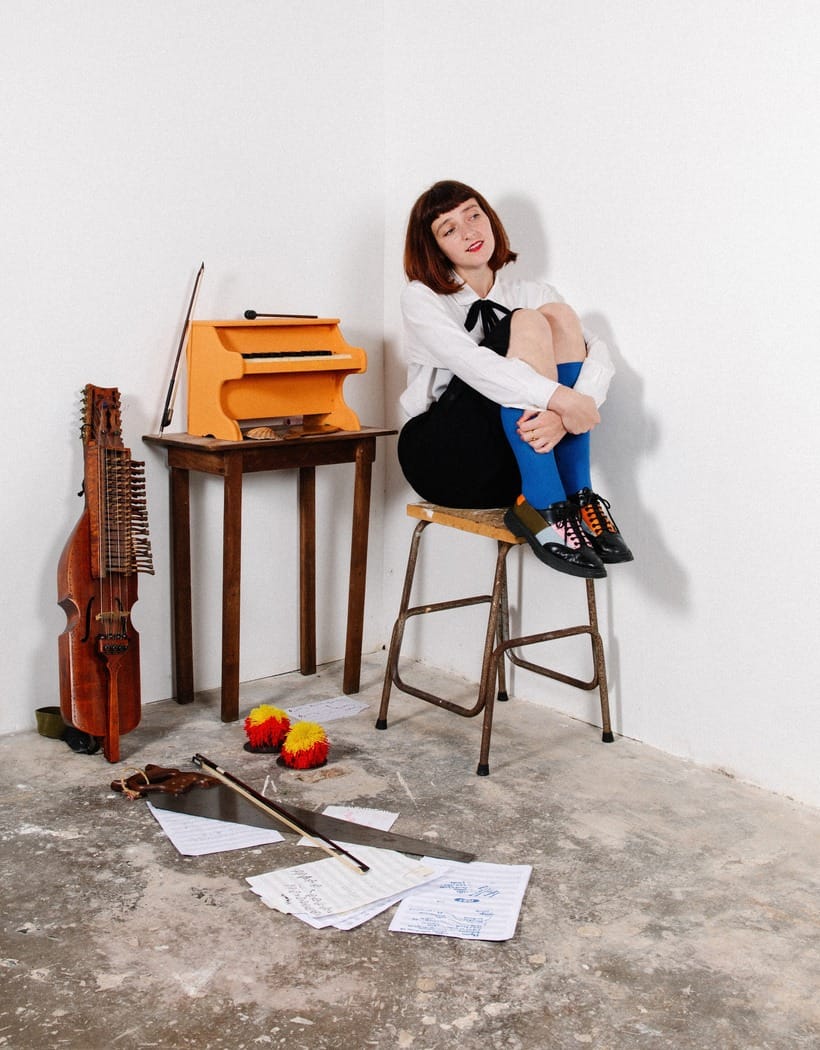
LT : So Todd reached out to me to get me involved in this one. I’ve known Todd for a while and had done some playing with his band, Lydian Collective—I also play the Swedish nyckelharpa, an ancient Swedish fiddle. I knew the games; I’d played both 1 and 2 and had a little cry even at the end of the second one! So I was over the moon to hear he and ustwo wanted to bring me in for this one. We effectively split the game in two, each taking a bunch of chapters and doing music as well as the sound-design treatment. The sound design is a very special element I feel in the game; it’s very much part of the musical ecosystem of each diorama—so much so that when working on compiling the soundtrack album, we included lots of this sound design in the tracks.
I’d love to hear more about how you worked on the soundtrack. Did the studio give you a clear brief to follow, or were you free to explore and create your own sound?
LT : For the music score, it was very much an open book—we still talk about the fact that each scene could have literally had a completely different musical treatment to the one that we’ve given it; it’s so open to interpretation! There were a couple of different approaches. Sometimes I’d get a scene and, using the art and colours, I’d create a musical response directly to that—the colours, shapes, environments. Sometimes I’d start by doing the sound design for the scene and then seeing what musical ‘space’ was left in the scene, and use that as a guide for writing. And then other times I’d use tracks I’d written separate from the scene—concept sketches of which I did many at the start of the project—and I’d lay them against the scene and sometimes there was a good serendipitous synergy. Sometimes the music was inspired by a mechanic or a cool game design concept, like being able to flip something and translating that physics into something musical.
In terms of the sounds themselves, we of course wanted to honour the previous dreamy lo-fi sound world, but this game adds a bit more of a wider instrumental palette—you can hear instruments like kora, hardanger d’amore, and khaen in there. I also conducted and orchestrated some pieces for a string ensemble which we recorded at Air-Edel. It was great to have a budget to do this—not always a luxury we’re given!
Some tracks are yours, others are by Todd, and on some – like "Healing" – you’re both credited. I’m really curious about how those kinds of collaborations work. Did you get to record together, or was it more of a remote back-and-forth?
LT : The collab tracks are credited in that way as we’d both contributed in a substantial way to those. For instance with "Healing," a track which fuses diegetic instrumental players of different villagers with a non-diegetic piano layer, we’d both contributed different instrumental layers to it. It was a bit like that on some of the tracks—a sort of remote ‘jam’! I would send some layers and invite Todd to add some and vice-versa. It’s a really nice way to work because there’s a musical surprise in seeing how someone adds to what you’ve put down. I feel this additive approach is quite freeing and possibly easier to work with than doing it in a more granular way—i.e., working out chords together in a room and trying to decide on something in the same space. Sometimes Todd would mock something up which I would record on my nyckelharpa or voice, sometimes the other way round.
Do you have a personal favourite track on the OST? One that’s particularly close to your heart?
LT : I do really like the track "Slummmber;" it’s got quite a dreamy feel. I did some vocal improvisations over some warm synth chords and ended up reversing them. I also made this specific virtual instrument from my voice I nicknamed ‘alien voice’—it was basically warped, ornamented vocal lines which had been autotuned. I thought a baritone sax would be a lovely way to double the chords and bring out the ‘soul’ in the harmony, so to speak, so I recorded my friend Tamar Osborn, who is a sax wizard! I like that the sax adds some very subtle breath and crackle to the sound; it literally breathes some human warmth into it!
I have to say, I’m absolutely in love with "Petrichor." The birds, the soft sound of the piano pedals, that floating moment when the cello comes in… Can you tell me the story behind that track?
LT : Oh that’s so nice! That track, funnily enough, I wrote very early in the morning on a rainy day… I live by the sea and was out on a very, very early morning walk in the ‘drizzle’ as we call it in the UK! I had my hood up but my eyes were peeking out to the grey sea. It was a real mood and vibe—and I think I was also a bit sleep deprived, hehe. The melody and chords just came to me; I think I have some voice notes somewhere of me singing it into my phone. I programmed it all out in MIDI and then sent it to my very talented friend Thomas Bingham (who actually lives in France), who recorded it on a special felted piano he has at home.
Then I added this field recording to it which I actually took in a graveyard that’s significant to me; it’s a very specific rain—like the end-of-a-storm, soft pattering of rain—and it’s just gently dripping off leaves on the trees. Monument Valley uses a lot of vinyl crackle as layers in the music, which gives it that lo-fi sound, but I was interested in the way the rain acted in a similar way to the vinyl noise layer! We found a good home for it in the game in this greyscale mountainous environment.
Your style reminds me of a mix between Eli Rainsberry (Wilmot Works It Out) and Henrik Lindstrand (LEGO Builder’s Journey). Do those names resonate with you? How would you describe your own sound?
LT : I actually didn’t know either of these composers, to my shame, and have since checked them out! Such cool work! I think my go-to is to create expressive melodic/harmonic ideas that come from a very natural and instinctive place and orchestrate these with often unusual instruments or textures. I think there’s something slightly whimsical going on in the feeling of my music and the chords I gravitate toward, but I like to be confident in the musical statement and the storytelling. I really enjoy when my music can have this functional purpose to support something like a video game. My friends are always telling me my music is full of dotted rhythms, which can often be hard to play (especially for classical musicians!), but that is totally my natural place—I think it comes from my upbringing in Scotland and absorbing all the Scottish folk! It’s all very much from the heart and I try to keep the head well away from any of the music-making!
If someone loved your music on Monument Valley 3 and wanted to hear more – where in your discography should they go next?
LT : I haven’t released too much music but I have a new two-track single out now called 'Motherboard’. I often use my voice in my work and this is an example of that. These are really personal songs without limitations, so I guess they have a purity to them. One is a joyous and earthy percussive track; the other has drum-and-bass influences with some warped gamelan riffs. They are both up-tempo and quite dance-y in their own way—dancing is my happy place (I probably spend too much time in my computer chair, so this is maybe a reaction to that hehe!). I should have another single coming out in the coming weeks; I’m working up to a bigger release hopefully later this year!
Will we get the chance to hear you again in another video game soon? Would you like to dive back into game composing in the future?
LT : Yes you will indeed! I can’t say much but I’m working on a PlayStation game at the moment on another team project. As always with these things, it could take a year or so for it to all be launched. It’s a fun one and a collaborative one! I definitely have an appetite now for video game writing and can’t wait to do more…
And to wrap things up – would you mind sharing three albums that mean a lot to you, and that you think everyone should hear at least once?
LT : Wow! Just three albums! I think three albums that have shaped my musical sound in some way and shaken my core are:
- Björk – Vespertine: The textures in this are incredible; it’s both such an intimate and epic/expansive album. I’ve listened to it to death!
- Tigran Hamasyan – Mockroot: There’s something extremely mystic about Tigran’s musical voice. I absolutely love the way he creates colour with harmony and I also love his contrasts between soulful solo piano tracks and vibrant metal-leaning outbursts.
- Joni Mitchell – Blue: It has to be Blue. This was one of the first albums I owned and I think Joni’s melodies and lyrics are akin to landscapes—the way she swoops and soars with her voice and perfectly pairs it with lyrics… I think she showed me there are no limits with melodic storytelling, but paradoxically she also reminds me to keep things simple!